Location:
PMKI > People
Skills & Qualifications > Competencies
& Interpersonal Skills.

- Competency Overview
- Personal Attributes of a Project
Manager
- Innovation &
Creativity
- Managing
Organizational Politics
- Coaching & Mentoring
- Project & Program Management
Competencies
- Competency
Frameworks
- Interpersonal Skills
- Making Decisions
- Negotiating &
Mediating
- Managing Senior Managers
- Information Acquisition
and Use
- Conflict Management
- Managing People and Teams
- Managing People
- Managing Teams
- Trust
- Meetings
- Useful External Web-links &
Resources.
Other related sections of the PMKI:
- Personal Ethics
- Leadership & Motivation
- PM Qualifications
- Communication
- Stakeholder engagement
- General Technical Skills
(PMBOK)
WP: Competency. Effective (ie, competent) managers need to know what should be done, have the skills to do the work and be willing to actually do the work - this paper describes the many aspects of competency.
Art: Valuing Soft Skills. Research demonstrating the importance of soft skills and their contribution to productivity.
WP: The innate effect of Bias. Deeply embedded biases affect every decision we make the challenge is to accept people as they are and then work rationally within our innate biases; this needs a rational approach to an irrational problem!
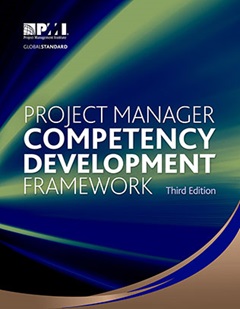 PMI's Project
Manager Competency Development Framework
PMI's Project
Manager Competency Development Framework
is available free of charge to PMI members,
see: https://www.pmi.org/pmbok-guide-standards/framework

The personal attributes of a competent manager affect
his/her level of competence and effectiveness. The core
underpinnings are the ethical framework the person lives
within and there leadership abilities. The more technical
aspects of competence are covered in the next
section below:
- See more on Personal
Ethics
- See more on Leadership
Art: Professional Project Management. What does professional project management look like? This article looks at the concept of a formal profession and what this means for project management.
WP: Social and Emotional Intelligence. Emotional intelligence is a basic tool that is the key to professional success; EQ and SQ are defined.
Art: The Ying and Yang of Resilience. Resilience is defined as the psychological capacity to adapt to, and recover from stressful circumstances. While desirable, this article suggests you can have too much of a good thing.
Blg: Persilience: A key to success! Persilience is an amalgam of resilience and persistence that recognizes the importance of both characteristics, it is essential to success of any endeavour you undertake.
Art: Influence without authority. How to build credibility and acquire the ‘currency’ you need to trade for the support and help you require.
 Art:
Harnessing Bathroom Brilliance. Creativity is
an essential element in problem solving and process
improvement. But, the challenge facing most professionals
is finding the time to be creative. This article looks at
some ways to harness your innate creativity.
Art:
Harnessing Bathroom Brilliance. Creativity is
an essential element in problem solving and process
improvement. But, the challenge facing most professionals
is finding the time to be creative. This article looks at
some ways to harness your innate creativity.
Blg: Linking Innovation to Value. This post takes a closer look at innovation, which is the critical ‘front end’ of the value chain. It does not matter how well you do the wrong projects and identifying the 'right ones' needs creativity, innovation and discipline! Click through to see more on the implementation of innovation.
Blg: The Diolkos: Innovation, Evolution, or a Parallel Development?. This post looks at a likely precursor to the Dilkos (a unique guided trolleyway), the Mirgissa slipway constructed in Egypt during the Middle Kingdom period some 1000 years earlier and asks the question was the Diolkos an original invention, or a synthesis of existing concepts combined in an innovative way? Both were designed to move cargo boats across several kilometers of land.
 This section focuses on those
aspects of a Project Manager’s skills and knowledge that
must be invoked for project success in large, complex
organizations. The first requirement is to recognize
Project Management as a mixture of art and craft and
understand how this connects to concepts of management and
leadership. A successful Project Manager must be able to
balance the requirements of art and craft, of management
and leadership. Many of these aspects of managing a
project don’t fall neatly into methodologies of Project
Management, in these papers, they are termed the Third
Dimension, rather than the nebulous term ‘politics’.
This section focuses on those
aspects of a Project Manager’s skills and knowledge that
must be invoked for project success in large, complex
organizations. The first requirement is to recognize
Project Management as a mixture of art and craft and
understand how this connects to concepts of management and
leadership. A successful Project Manager must be able to
balance the requirements of art and craft, of management
and leadership. Many of these aspects of managing a
project don’t fall neatly into methodologies of Project
Management, in these papers, they are termed the Third
Dimension, rather than the nebulous term ‘politics’.
To be successful in this type of project, a Project Manager must be able to work within the power structures of the organization, tapping into the ‘power lines’. A Project Manager can survive in the Third Dimension, and can deliver successful projects, but must know the ‘who’ and the ‘how’ to master the ‘game’. Not every Project Manager will see the need to do this, nor will he/she believe that it is possible to learn how. These papers explore how Project Managers have acquired the skills in the past, and through looking at how many corporations are now working to teach their people the necessary leadership and awareness skills, speculate on how large complex organizations can encourage and support their Project Managers to become adept at operating in the Third Dimension.
Blg: Practical Project Politics. PMI expects project managers to be politically smart and recognizes that the appropriate and skillful use of politics and power help the project manger be successful - organizational politics are explained.
PP: What Does a Project Manager Need to Deliver Successful Projects (In large and complex organizations)? This paper focuses on those aspects of a Project Manager’s skills and knowledge that must be invoked for project success in large, complex organizations by defining Project Management as a mixture of art and craft and how this connects to concepts of management and leadership.Three case studies are used as a basis for assessing success in terms of project ‘hard’ and ‘soft’ criteria. However, even the ‘what’ (or hard criteria) of Project Management can be affected by Stakeholders’ ‘hidden agendas’; these ‘hidden agendas’ must be recognized early and resolved.
PP: Tapping the Power Lines (how to connect to this organizational influence grid). Successful completion of project deliverables depends on project management of both ‘hard’ skills (time, cost, scope—1st Dimension) and ‘soft’ skills (relationship management—2nd Dimension) throughout the project life cycle to achieve project objectives that fully address stakeholder expectations.
PP: The Accidental Project Manager – The Getting of Wisdom. The phenomenon of accidental project managers is explored, and ways to help them and their novice colleagues to increase their chances of project success by describing the project management skills needed for success.
PP: The future of the PM Hero. The role of project managers within organizations is changing. In the 1960s and 70s most project managers were ‘accidental PMs’: their careers and qualifications were always in another discipline and the world was only starting to embrace the concept of ‘projects’. From the 1980s through to the start of the 21st Century project management became better defined, understood and codified. The certification of project managers has became increasingly common and the ideal of delivering projects on time and on budget has been recognized. This era has seen the accidental PM change to the PM ‘hero’. A highly skilled practitioner who could almost single-handedly create project success measured by the iron triangle of time, cost and scope. Since the second decade of the 21st century this is no longer be enough. Good project management will probably become business as usual. The PM will display ‘5th Level Leadership’, attuned to the needs of the team as well as the power structures of the organization. And, the organization's governance structures will incorporate effective Portfolio, Program and Project management supported by PMOs. In this environment, project success will increasingly be measured in terms of the value realized by the organization and by stakeholder satisfaction. Rather than the project being an end in itself, it will be seen as part of the organization’s strategic mission and the key element of success is how well the project’s outputs help the organization achieve its desired outcomes. This paper briefly outlines the evolving role of the PM over the last 50+ years and focus on the emerging skills needed by successful PMs in the new decade as their role changes from a hero to business leader.
PP: Advancing Project Management in Learning Organizations. Effective project managers are required to have both “hard” technical skills to help control the iron triangle of time, cost and functional scope as well as relationship management skills to work effectively with people and get the best out of them. This paper argues that project managers also need a third skill: we refer to it as tapping into the power lines. This is a skill beyond the management of schedules, budgets and milestones, beyond leading project teams or managing suppliers and users, and even beyond what is commonly regarded as managing a project’s senior stakeholders. The hypothesis, based on data gathered from three case studies, is that there is a need for project managers to be skilled in managing at the third dimension in large organizations; to understand the need for, have the ability, and be willing, to “tap into the power grid” of influence that surrounds all projects, particularly in large organizations. Without third dimension skills, project managers and their organizations will find delivering successful project increasingly more difficult. The second part of this paper will discuss how project managers might achieve competence in managing the third dimension both through individual effort and with the support of the learning organization.
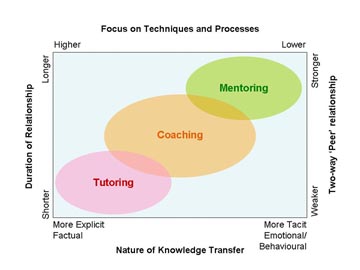 Coaching and mentoring are means of achieving personal and
skills development. The techniques overlap and are
complementary:
Coaching and mentoring are means of achieving personal and
skills development. The techniques overlap and are
complementary:
For more on the differences between tutoring, coaching and mentoring see our blog post: Developing your team.
Blg: Phronesis – A key attribute for project managers. Working out the right way to do the right thing in a post-truth world is a key skill for every project manager.
WP: Personal Time Management. This White Paper takes a pragmatic look at some of the options that can help achieve the maximum output from your valuable working time.
Art: Understanding ‘Expert Judgement’. Expert judgement is and important concept for project managers to master; this paper explains what it is and how to apply it.
WP: Systems Thinking. Systems thinking is a problem-independent way of applying principles and methods related to the successful engineering of systems, to meet stakeholder requirements in a rigorous way to integrate people, purpose, process and performance.
DP: GAPPS (2007) A Framework for Performance Based Competency Standards for Global Level 1 and 2 Project Managers. Global Alliance for Project Performance Standards (GAPPS) is a volunteer organization working to create consistency in global standards.
DP: GAPPS (2019) A Framework for Performance Based Competency Standards for Project Controls. Global Alliance for Project Performance Standards (GAPPS) is a volunteer organization working to create consistency in global standards.
DP: APM Competence Framework. Developed by the Association for Project Management (UK). Project manager competencies.
See also: External Web-Links below.
Two key interpersonal skills are the ability to motivate
and lead others, these are covered in:
Leadership & Motivation
Art: Practical Stakeholder Engagement.The four basic elements of effective stakeholder engagement - achieving an effective engagement with your team, leading to a constructive dialogue that helps create project success does need planning, processes and time.
Click through to see more on Advanced Stakeholder Engagement.
Art: Perspectives on time! People see time differently. For some, time flows from the future into the present and on to the past at a steady rate; our plans for tomorrow become the actions of today and then the memories of times past. Others see time as a river carrying them forward to an uncertain future. Understanding these perspectives helps deal with different attitudes to punctuality.
Art: Influence without authority. How to build credibility and acquire the ‘currency’ you need to trade for the support and help you require.
When a decision is needed the worst outcome is not making
the decision. Adapting a concept proposed by Annie Sheean,
you need to to BACK yourself to make a decision,
where:
B = Breath
A = Assess the risk
C = Create Choices
K = Kick into Action
There may be more elements needed in the decision-making
process (discussed in the papers below) but as a
foundation BACK yourself and make a decision
is a very good starting point.
The next consideration is the consequences of the decision, most business decisions can be adapted and adjusted later, even reversed, these benefit from a relatively quick decision making process - get on with it! But there are some decisions that are irreversible, the increased risk requires more care, and there are benefits from seeking other people's opinions and advice - you still decide and a timely decision is desirable; the difference is the risk warrants greater diligence in the decision making process.
WP: Decision Making. Decision making is a central part of any management role, this paper looks at the different types of decision and the options for making a 'good decision' and the importance of ethical decision making. Download the PMI Ethical Decision-Making Framework.
WP: Problem Solving. The process of solving problems effectively by generating alternatives and finding better means is at the heart of effective project management. This paper outlines the different techniques that can be applied to solve problems.
Art: Problems, Conflicts and Decisions. Conflict management, problem solving and decision making are interrelated and all are focused on achieving the best possible outcome. This paper describes this interrelationship.
Art: Every Decision is a risk! When a decision maker has to choose between a number of viable alternatives with the selection of the best option being influenced by information (usually insufficient) and preferences founded on values and ethics, the decision involves uncertainty and therefor incorporates an element of risk. No process can guarantee a good outcome from every decision, but working through the pragmatic process outlined in this article can help increase the probability of an acceptable outcome (see more on risk management).
Blg: Practical Decision Making Solving problems using heuristics (rule of thumb) that create the best chance of a workable solution, using the available resources, in a poorly understood situation (but you need to be prepared to be wrong).
Art: The Problem with Paradox. Virtually every management system generates a series of paradox that cannot be removed because both of the factors that create the paradox are important, but at the same time contradict each other. This article discusses how to live with paradox.
Art: Are you a decisive or a divisive decision maker?? All effective leaders must make decisions – good ones are decisive, not divisive.
Art: Wiser Group Decision Making. If ‘two heads are better than one’ why do so many committees make bad decisions? this article suggests some practical solutions.
Art: Six Thinking Hats. A thinking tool for group discussion and to assist individual thinking.
Art: Learning from your Mistakes. You cannot attempt something new without occasionally making mistakes and if lessons are learned, years later a collection of mistakes is what is called experience.
Art: Know when to lose. Pick your battles! The art of effective dispute management is to make sure any ‘wins’ are worth the cost and more importantly making sure any losses are manageable.
 Negotiation
is a strategy of conferring with parties of shared, or
opposed, interests with a view towards compromise or
reaching an agreement. It is, or should be, a process
designed to achieve a mutually acceptable outcome because
there are always two parts to any negotiation:
Negotiation
is a strategy of conferring with parties of shared, or
opposed, interests with a view towards compromise or
reaching an agreement. It is, or should be, a process
designed to achieve a mutually acceptable outcome because
there are always two parts to any negotiation:
Effective negotiations are a collaboration, not a competition. The parties should:
While ideally everyone is focused on achieving a good outcome, different people adopt different negotiating styles. Effective negotiators are aware of these approaches and may choose to their style to meet the needs of particular situations before trying to steer the negotiation towards the style that has the potential to deliver the best outcome all round.
WP: Negotiating and Mediating. Negotiating is, or should be, a process designed to achieve a mutually acceptable outcome, mediation is a facilitated negotiation.
WP: Win-Win Negotiations. A win-win approach to negotiation should be based on a risk/reward standpoint.
Art: Negotiating in the midst of uncertainty. Negotiating in a time of uncertainty requires a different approach to 'normal' negotiations. This article looks at the unique challenges and opportunities created by a crisis and the best approach to achieving a 'livable' outcome.
Blg: This post is Without Prejudice! Without prejudice communications only apply to legal proceedings (court cases and Arbitration), to prevent the admission of evidence that was offered by one party to the other on a without prejudice basis. Which means, if you want to have a meeting or make an offer that is only valid if it leads to a settlement, or other agreed outcome, the different processes discussed in this post are needed.
PP: Advising upwards: managing the perceptions and expectations of senior management stakeholders. Part of the PM’s role is to understand senior management support is vital for project success and to do whatever is necessary to ensure that senior stakeholders understand and fulfill the requirements of this role. This is about creativity in relationship management: there is no template or checklist to follow; this is not the realm of the faint-hearted.
Art: Influence without authority. How to build credibility and acquire the ‘currency’ you need to trade for the support and help you require.
 Advising
Upwards: A Framework for Understanding and Engaging
Senior Management Stakeholders. Building, and
managing, relationships with senior (upwards) stakeholders
is essential for success. Advising Upwards makes a
detailed examination of stakeholder relationship
management, starting with a discussion of the personal
changes that senior managers must make as they move into
executive roles in the organization, and recognizing that
through targeted and purposeful communication the team
must ensure that their senior stakeholders understand how
best to support their work.
Advising
Upwards: A Framework for Understanding and Engaging
Senior Management Stakeholders. Building, and
managing, relationships with senior (upwards) stakeholders
is essential for success. Advising Upwards makes a
detailed examination of stakeholder relationship
management, starting with a discussion of the personal
changes that senior managers must make as they move into
executive roles in the organization, and recognizing that
through targeted and purposeful communication the team
must ensure that their senior stakeholders understand how
best to support their work.
Blg: What is your personal brand? If you want a stakeholder to ‘buy into’ your ideas, believe your communication or take action on your recommendations they need to recognize you as a credible messenger. Whilst you can build credibility over time, you only ever get one chance to make a good first impression and your personal brand will be a major contributor to the impression created in the mind of the person you are interacting with.
WP: Data Gathering & Brainstorming. Data gathering is a process of preparing for and then collecting data needed to facilitate project decision making, one technique is 'brainstorming'.
Art: Data to Wisdom – Creating and Managing Knowledge. The processes and documents used to transform raw data into the knowledge needed for wise decisions from a project controls perspective.
Blg: Fine Tune your detectors. Good information is essential for good decisions.
Art: Eliminating the fear factor. W. Edwards Deming's 14 key principles for management #8 is: Drive out fear, so that everyone may work effectively for the company.
Click through to see more on Knowledge Management.
Click through to see more on Communication Management.
Inter-person conflict is normal in most high pressure situations, projects are no different. What's important is to manage the conflict effectively, not to try to suppress genuine differences.
WP: Conflict Management. The ability to deal with conflict effectively is directly related to overall management success and is a key aspect of relationship management.
Art: Why are they (you) fighting? Emotions kick in quicker and are far more powerful than rational thought. Fight or flight is one of the most basic of survival strategies and has to be managed to reduce conflict.
Art: Communicating in Conflict. One of the realities of life is every once in a while, you are going to become embroiled in a dispute or argument that is emotional and personal. This article maps out a set of strategies that can help you stay focused on using communication to achieve a pragmatic outcome you can 'live with'.
Art: Know when to lose. Pick your battles! The art of effective dispute management is to make sure any ‘wins’ are worth the cost and more importantly making sure any losses are manageable.
Art: Eliminating the fear factor. Drive out fear, so that everyone may work effectively for the company. If people are people are fearful of being ‘blamed’, the last thing they will do is pass on accurate information about an issue or a problem.
Art: Problems, Conflicts and Decisions. Conflict management, problem solving and decision making are interrelated and all are focused on achieving the best possible outcome. This paper describes this interrelationship.
While there is almost always a personal dimension to
conflicts, many also include a contractual dimension
involving organizational interests. For more on the
practical aspects of contractual dispute management with a
focus on construction/engineering:
See more on our Dispute
Management page:
- Dealing with poor
performance
- Contract &
Commercial Management
- Dispute Management
- General
Concepts for Minimizing Disputes
- Managing
Contract Disputes
- Defective
Work Claims
- Legal
Dispute Processes
Forensic time and cost analysis and the preparation of
forensic reports, are vital to understanding precisely
what has gone wrong with a view to either making, or
defending, claims for extensions of time (EOTs) and/or
delay and disruption (prolongation) costs. The techniques
needed for making and defending delay and disruption
claims are Mosaic's
Claims and Forensic Analysis page
- Forensic analysis
and reporting
- Assessing
Delay and Disruption
- Concurrent
and Parallel Delays
- Referenced
Court Judgements
- Claims & Expert
Witness
WP: The Functions of Management. Project management is a subset of general management, the five functions of management are discussed in the modern context (see more on the foundations of Henri Fayol's theory).
WP: Understanding Power and Authority. The effective use of authority is a key part of project management and an element of leadership. Within organisations, management authority is defined as the power or right to give directions, make decisions, and enforce obedience; but this is rarely an absolute power, influence and soft skills are also needed.
Art: Dealing with difficult people. Effective ways to manage a dysfunctional relationship with a difficult person.
Art: Understanding ‘Expert Judgement’. Expert judgement is and important concept; this paper explains what it is and how to apply it.

Collaborative teams are key to success in any business activity. The most effective team consist of individuals who can work independently on their own tasks, but also recognize the need to work collaboratively with other team members toward the activity’s goal and the organization’s success. The leader of this team contributes significantly to team success by inspiring all team members to work together to achieve this goal, but must also intervene to reduce conflict and to motivate team members to continue to work collaboratively.
This means effective team development is vital to enable the project to meet its objectives, including enhancing the ability of each stakeholder to contribute to the team, and enabling the team to function effectively. Team development is enhanced by:
Two models of team formation are discussed in The Forgotten Stakeholders paper (below), the first being the 35 year-old Tuckman Model describing a gradual progression through ‘forming’, ‘storming’, ‘norming’ and ‘performing’. (Tuckman 1975) At the other end of the spectrum is the ‘punctuated equilibrium’ model of Gersick, which proposes that, as in nature, teams forge stronger relationships only after a cataclysmic event such as severe interpersonal conflict, major schedule slips or any other major event of project life. Under this model, the leadership requirements will be different. (Gersick 1988) If the Gersick model best reflects projects in today’s environment, there will need to be a major paradigm shift in how Project Managers form multi-vendor, multi-skill teams.
Art: Crafting project success. People work together on projects in all sorts of ways. This article looks at the key requirements for creating a committed and cooperative team,that is capable of delivering a project successfully.
Blg: Developing your team. You are responsible for building the team you lead! One of the key stakeholder management roles fulfilled by effective team leaders and project managers is helping their team members grow and improve.
Art: Are organization charts still useful?. This article suggests the traditional organization chart (OBS) is of very limited value in a modern organization, and of less value in a project or program. There are less restrictive ways to document seniority, responsibility, pay-grade, etc. Click through to see more on the origins of this type of management chart (including the WBS).
Art: Team Harmony. The McKinsey 7-S framework defines seven internal aspects of an organization or team that need to be aligned if it is to be successful.
Art: Rewarding you team. The SCARF model of thinking about what happens in the brain during social situations, and can provide a useful insight to the way motivation works.
WP: The Art of Delegation. You cannot do it all yourself! Delegation is when you assign responsibility to another person to carry out a specific task, and is a key management and team building skill. Effective delegation is the key to your success.
WP: Effective Explanation. Effective delegation requires effective explanation of the work being delegated the art of explanation is outlined in this White Paper.
Blg: HPWP Lessons from Manufacturing (High Performance Work Practices). Applying HPWP in a project team environment to create success.
Art: Eliminating the fear factor. Drive out fear, so that everyone may work effectively for the company. If people are people are fearful of being ‘blamed’, the last thing they will do is pass on accurate information about an issue or a problem.
Blg: The art of giving feedback. The ability to give actionable feedback on performance to team members so they know what you expect from them. Blg: Using negative feedback. How we can make use of negative feedback directed to us to improve.
Art: Fairs Fair - Process & Procedural Fairness. Process fairness is quite distinct from outcome fairness. When you have to deliver bad news to a person, the processes you use are at least as important as the decision you have made.
Art: The power of Happiness. The role of happiness and fun in developing a motivated team, but which comes first?
Art: Is a happy team a motivated team? What is happiness, and the importance of happiness to team performance - unhappiness demotivates, but the role of happiness is far from clear.It would appear that leadership and motivation are interconnected and in combination can create a happy, healthy and productive workplace.
Art: Communicating in Conflict. One of the realities of life is every once in a while, you are going to become embroiled in a dispute or argument that is emotional and personal. This article maps out a set of strategies that can help you stay focused on using communication to achieve a pragmatic outcome you can 'live with'.
 PP:
The Forgotten Stakeholders - Forming Teams in an
Outsourced Environment. The paper outlines
some of the reasons for outsourcing IT, and describes the
risks to the organization of inadequate preparation in the
negotiation of contracts. It also outlines ways to ensure
a more successful outsourcing relationship between client
and supplier. In addressing alternatives to outsourcing,
the paper identifies the importance of trust and
commitment in relationships between organizations, between
organizations and their employees, and between employees –
particularly those in teams. Without the establishment of
trust and commitment between the individual team members,
they will never grow into high-performing teams. Two
models of team formation are investigated, the first being
the 35 year-old Tuckman Model, the other is the
‘punctuated equilibrium’ model of Gersick.
PP:
The Forgotten Stakeholders - Forming Teams in an
Outsourced Environment. The paper outlines
some of the reasons for outsourcing IT, and describes the
risks to the organization of inadequate preparation in the
negotiation of contracts. It also outlines ways to ensure
a more successful outsourcing relationship between client
and supplier. In addressing alternatives to outsourcing,
the paper identifies the importance of trust and
commitment in relationships between organizations, between
organizations and their employees, and between employees –
particularly those in teams. Without the establishment of
trust and commitment between the individual team members,
they will never grow into high-performing teams. Two
models of team formation are investigated, the first being
the 35 year-old Tuckman Model, the other is the
‘punctuated equilibrium’ model of Gersick.
WP: The Value of Trust. Trust is a key element in the effective management of project teams and contracts. High levels of trust speeds up decisions and lowers costs.
Blg: Credit, Trust and Emotions. There is no credit without trust because there is always asymmetrical information in every transaction. But how much trust someone is willing to invest is driven by emotions as much s by logic.
Prs: Trust: a tale of
two constructions. Building and maintaining
trust through understanding stakeholder relationships.
This paper contrasts two projects and the effect of
different contractual arrangements on their respective
supply chains, to show how an attitude of sharing risk and
a focus on building and maintaining robust relationships
can lead to more efficient project delivery. The
construction industry has a reputation for aggressive
contractual arrangements, disputes and even loss of life.
Wembley Stadium illustrates how a lack of trust and ‘hard
dollar’ contracts impacted relationships between the
delivery partners, caused massive losses to the main
contractor and extensive litigation. Contrast Wembley
Stadium to the construction of Heathrow Terminal 5 where
collaborative contractual arrangements lead to an on time,
on budget construction outcome that is unprecedented for a
£4 billion airport terminal.
Building and maintaining effective relationships is not
easy. It requires both parties to recognize that there
will be differing expectations and definitions of success
and requires work to develop the necessary trust through
understanding the expectations of important stakeholders.
However, as Terminal 5 proves, the benefits are well worth
the effort. The presentation briefly covers:
• Understanding the value of trust (see also WP1030: The
Value of Trust)
• A focus on understanding who matters
• Building relationships through targeted, appropriate and
purposeful communication.
• Comparisons and lessons from Wembley Stadium and
Heathrow Terminal 5 construction.
WP: Managing Meetings. To make meetings effective, careful thought has to be given to the choice agenda, attendees and the specific purpose of each meeting.
Blg: Meeting Management - strategy and tactics. If your job involves arranging meetings then you need to get both your strategy and your tactics right to create a short, effective, useful and enjoyable experience for everyone!
Most people find meetings 'painful', however, one important aspect is recording the outcome. In situations of conflict, who takes the minutes and what is recorded can be very influential (including what is given priority in court hearings). The second half of this clip from 'Yes Prime Minister' is still relevant. Click to watch.
Art: Wiser Group Decision Making. If ‘two heads are better than one’ why do so many committees make bad decisions? this article suggests some practical solutions.
WP: Facilitation. Facilitation is the effective deployment of the processes and tasks needed to run a productive and impartial meeting.
Blg: Are you a workshop leader or facilitator? Four different approaches to facilitating or leading a workshop depending on its purpose.
PMI have defined the competencies and skills needed by proficient project managers in the 'PMI Talent Triangle'.
PMI's Project
Manager Competency Development Framework
is available free of charge to PMI members,
see: https://www.pmi.org/pmbok-guide-standards/framework
GAPPS - Project and Program Manager Competency Standards (free download): https://globalpmstandards.org/
IPMA Competency Framework - IPMA Competence Baselines: https://shop.ipma.world/product-category/ipma-standards/books-ipma-standards/
AIPM Competency Framework - Project, Program
& Portfolio management:
https://www.aipm.com.au/certification/national-certification/competency-standards-for-pm
The Organizational Zoo - Humorous observations of the characteristics in your organizational Zoo (book) - http://www.organizationalzoo.com/
Complex Project Management Competency Standards: https://iccpm.com/resource-centre/cpm-standards/