Location:
PMKI > Project
Controls and Scheduling > Schedule Quality
Assessment.


- Schedule Quality Overview
- DCMA 14 Point Assessment
- Logic Inconsistencies
- Schedule Quality & Conformance
Scoring
- Schedule Quality Assessment Tools
and Software
- Useful External Web-links &
Resources.
Other related sections of the PMKI:
- Project Quality Management
- Schedule
control in Agile and Distributed projects
 One of the foundations for
successful project management is to start with the right
schedule. The devil is not in the detail.... it is
in the schedule!!
One of the foundations for
successful project management is to start with the right
schedule. The devil is not in the detail.... it is
in the schedule!!
Smart project managers always check the schedule! But, the subjective view of someone in the project team (even you) is often based on a personal assessment of what an acceptable schedule should look like. There are better options:
For many years scheduling was seen as a ‘black art’ with only subjective opinions as to what constituted a ‘good schedule’, any debate over schedule quality tended to be confused with arguments over personal preferences in tools and/or networking techniques. Unfortunately despite options to standardize scheduling practice evolving since the turn of the 21st century, these attitudes are still far too common.
The publication by PMI of its ‘Practice Standard for Scheduling’ in May 2007 (now in its third edition) went a long way towards resolving many of these issues. The Standard development team drew on expertise from around the world to deliver an authoritative document that defines ‘good scheduling practice’ based on the ‘Time Management’ processes from the PMBOK® Guide. Also, for many years, certifications in scheduling were focused exclusively on senior schedulers and had very little effect on the profession of scheduling. More recently these factors have started to change - new ideas and paradigms are emerging to change the way scheduling and project ‘controls’ operate.
Key publications include:
The future of project management is predicted to be one that focuses on ‘soft skills’ including; communications, motivation and leadership. Uncertainty will be recognized as normal and skills for managing uncertainty will become essential for successful project managers. Consequently, the revised focus on using the schedule should concentrate on supporting the project management team with useful information that emphasizes:
In this scenario, scheduling should be seen as a modelling process that helps communicate and coordinate ideas about what might happen in the future. This is achieved by providing timely and useful information, NOT masses of irrelevant data weeks after the event. This is the essence of effective time management and the basis for building project success, which in turn provides the framework for defining a quality schedule, that is fit-for-purpose. This approach is becoming increasingly important on projects where the CPM paradigm simply does not work. This type of project (Class 3 projects) include Agile and Distributed projects, time management is still important, but the techniques and tools needed to optimize resource utilization are different, see: Schedule control in Agile and Distributed projects.
This section focuses on the need of Class 1 and 2
projects where the use of an effective CPM schedule is
still one of the best options for effective control:
Art: Testing Schedule Quality: Why do so many organizations and clients accept bad schedules? suggests five key questions to ask about the development of a schedule to ensure it meets an acceptable standard.
PP: Standardizing Quality in Project Scheduling. The role of certifications and standardization in the development of scheduling practice focused on successful project delivery. This paper also provides a review of the PMI Practice Standard for Scheduling, and its use as a conformance measurement tool.
The Defense Contract Management Agency (DCMA) has developed a set of standards that (when met) ensure a well-built schedule.
WP: 14 point DCMA assessment. Each of the checks included in the DCMA 14 Point Assessment are discussed together with some additional useful checks from other sources. The DCMA 14 Point schedule assessment is probably the most used assessment and is required by the USA government in many projects. Download WP1088.
Note: Section 4 of DCMA-EA PAM 200.1 define the last published version of the DCMA 14 Point Schedule Metrics, which were developed to identify potential problem areas within a schedule. Download Earned Value Management System (EVMS) Program Analysis Pamphlet (PAP), DCMA-EA PAM 200.1, October 2012.
Blg: DCMA 14 Point Schedule Assessment – Updated.This post describes the intended use of the latest DCMA 14 point assessment and how it varies from earlier versions.
Blg: The evolution of the DCMA 14 Point Schedule Assessment.This post looks at the DCMA 14-Point schedule assessment process, its origins and relevance in its 20th year. Our conclusion is the usefulness of this approach to assessing schedule quality is questionable!
Logical anomalies in a CPM schedule can cause unexpected consequences when an activity duration is changed - for example, increasing the duration of a critical activity reduces the overall project duration. These post highlights the issue:
Blg: CPM Scheduling – the logical way to error #1.
Blg: CPM Scheduling – the logical way to error #2.

There are a number of 'standard' approaches to assessing schedule quality.
 PMI's
Practice Standard for Scheduling includes a
conformance scoring system that allows schedules to be
rated for conformance with accepted good practice. This
version of the Standards allows assessors to assess
whether a schedule uses (ie, contains) a component
correctly, not the way it is utilized (ie, its
usefulness). The standard is available free of charge to
PMI members.
PMI's
Practice Standard for Scheduling includes a
conformance scoring system that allows schedules to be
rated for conformance with accepted good practice. This
version of the Standards allows assessors to assess
whether a schedule uses (ie, contains) a component
correctly, not the way it is utilized (ie, its
usefulness). The standard is available free of charge to
PMI members.
 The
U.S. Government Accountability Office (GAO) Schedule Assessment Guide
provides more comprehensive guidance on creating and
maintaining a schedule and supports the scheduling
concepts introduced in the Cost Estimating and Assessment
Guide. Download a free copy of the
GAO
Schedule Assessment Guide.
The
U.S. Government Accountability Office (GAO) Schedule Assessment Guide
provides more comprehensive guidance on creating and
maintaining a schedule and supports the scheduling
concepts introduced in the Cost Estimating and Assessment
Guide. Download a free copy of the
GAO
Schedule Assessment Guide.
WP: 14 point DCMA assessment. The Defense Contract Management Agency (DCMA) has developed a set of standards that (when met) ensure a well-built schedule. Each of the checks included in the DCMA 14 Point Assessment are discussed together with some additional useful checks from other sources. The DCMA 14 Point schedule assessment is probably the most used assessment and is required by the USA government in many projects. Download WP1088.
Earned
Value Management System (EVMS) Program Analysis
Pamphlet (PAP), DCMA-EA PAM 200.1, October 2012.
Section 4 of DCMA-EA PAM 200.1 define the last published
version of the DCMA 14 Point Schedule Metrics,
which were developed to identify potential problem areas
within a schedule.
Prs: Project Controls. The art of predicting project completion. A good baseline schedule is not enough. Developing a schedule that complies with the GAO schedule assessment guide by incorporating resources and risk.
Blg: The Schedule Compliance Risk Assessment Methodology (SCRAM). A brief description of the SCRAM approach to assessing a schedule and the organization that is developing it. SCRAM is an approach for identifying risks to compliance with program schedule, i.e. SCRAM can be used for the assessment and improvement of schedule risk compliance. Unlike the automated options below, SCRAM uses an assessment team to review all aspects of the schedule's development (people and process as well as technical conformance) - https://sites.google.com/site/scramsitenew/
The information in these papers (and more) has been consolidated into Easy CPM which focuses on schedule quality in section 6.1.
 Easy CPM is
an easy-to-read, course-in-a-book, that provides practical
training and guidance to individuals and organizations
involved in developing or using CPM schedules based on the
Critical Path Method (CPM). It is designed to act as both
a reference, and practice guide, for people implementing
CPM scheduling after they have learned to use the CPM
scheduling software of their choice.
Easy CPM is
an easy-to-read, course-in-a-book, that provides practical
training and guidance to individuals and organizations
involved in developing or using CPM schedules based on the
Critical Path Method (CPM). It is designed to act as both
a reference, and practice guide, for people implementing
CPM scheduling after they have learned to use the CPM
scheduling software of their choice.
See more, free preview and buy ($35, immediate download).
Effective analytical tools are available to automate the checking process. These tools reverse engineer schedules created in a range of software tools and check for errors and inconsistencies. Some of the better options include:
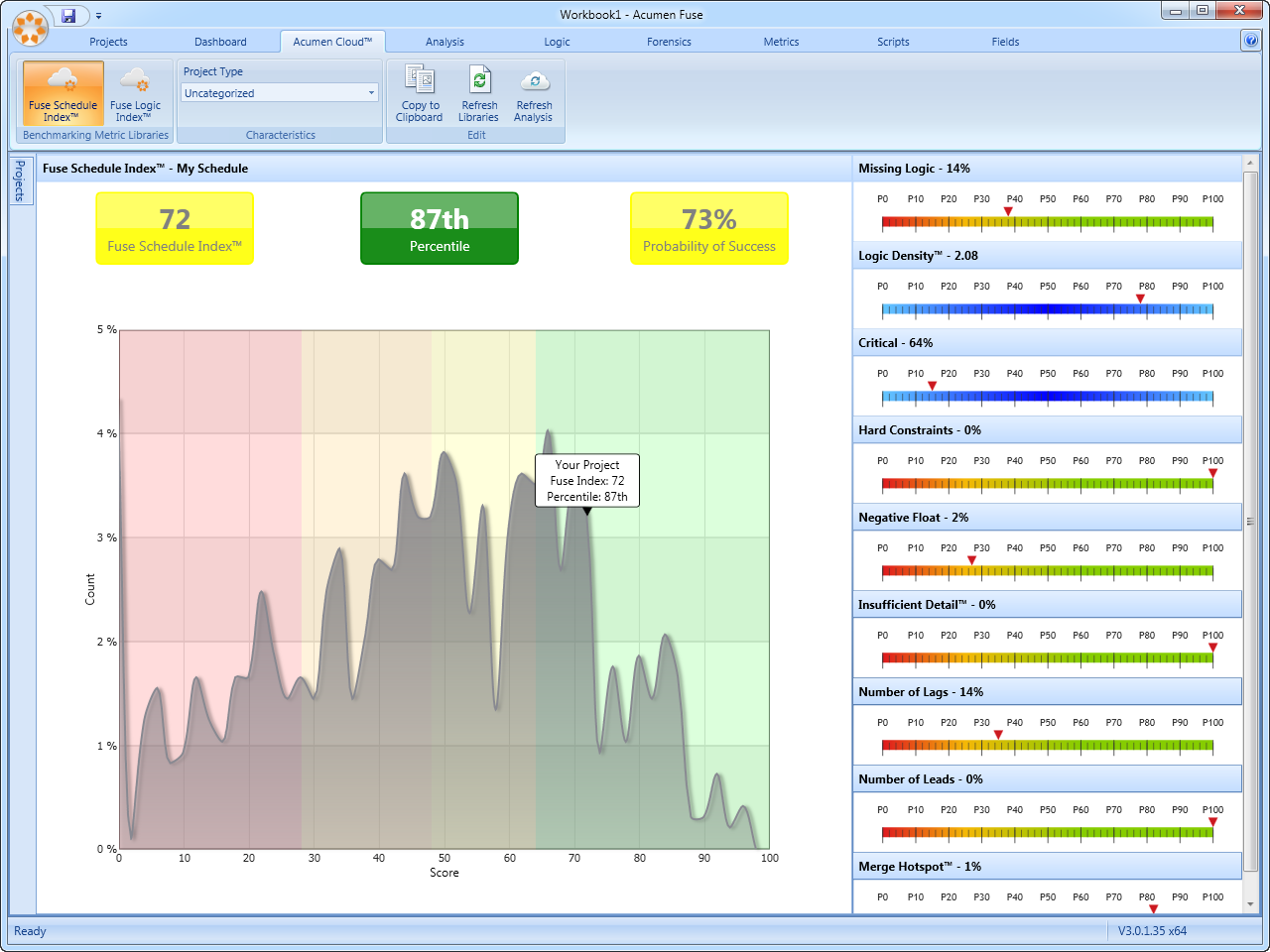
Deltek Acumen Fuse: A powerful analytical tool that integrates with most of the major scheduling tools. Acumen is a comprehensive analysis and correction tool that Fuse reporting is designed to be hierarchical so that it accommodates planners, schedulers and executive’s needs. You can drill down, slicing and dicing through multiple levels (Work Breakdown) or by any other code or user field to quickly pinpoint potential issues with your schedule. Conversely, summarize detailed results and publish to project dashboards, executive briefings and PowerPoint presentations, all at the click of a button. See: https://www.deltek.com/en-au/products/project-and-portfolio-management/acumen/modules/acumen-fuse.
Schedule Analyzer: For Primavera,is a suite of programs to assist the Scheduler and Claims Analyst in performing difficult or impossible scheduling tasks. Multiple modules are included as a single package, offering detailed analysis and expert recommendations with a wide range of capabilities and reports. Add the eForensic package for forensic analysis - http://scheduleanalyzer.com
Schedule Inspector: Barbecana’s Schedule Inspector does 30 different tests on your schedule, including all 14 points in the Defense Contract Management Agency's (DCMA's) assessment guide for Microsoft Project 2007 or later schedules, plus many others including: redundant relationships, out-of-sequence progress, connectivity index (ratio of relationships to tasks), and resources or relationships on summary tasks - https://www.barbecana.com/
SmartPM Technologies: Project analytics built for the Construction Industry. At every schedule update, SmartPM can analyze schedule quality and integrity, perform on-going critical path delay analysis, assess schedule changes over time, support compression and feasibility analysis, and run predictive analytics on both critical path sensitivity and major milestone completion - https://smartpmtech.com/
For more schedule quality assessment tools visit our comprehensive software listing.
Access the Guild of Project Controls Body of Knowledge.
A suite of process-based documents which define Project
Controls (membership required): http://www.planningplanet.com/guild/GPCCAR-modules