Location:
PMKI > Organizations
& Governance > Corporate/Organizational
Governance.


- The Function of Governance and
Governing
- Governance and Stakeholders
- Governance systems
- Governing the organization's
Projects, Programs, & Portfolios
- Overview and
Objectives
- Governing for
success
- Governance failure
- Differentiating Governance and
Management
- Useful External Web-links &
Resources.
Other related sections of the PMKI:
- Corporate/Organizational
Management
- The Origins and
Development of Governance
- Sustainability
The structuring and oversight of the organizations governance systems and capabilities.
 The
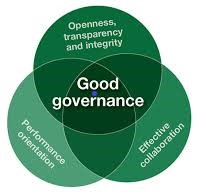
purpose of governance is to 'to align as nearly as
possible the interests of individuals, organizations and
society', this is a much higher order of objective
than merely enforcing processes and procedures. The
concepts outlined in these papers are consistent with:
The
purpose of governance is to 'to align as nearly as
possible the interests of individuals, organizations and
society', this is a much higher order of objective
than merely enforcing processes and procedures. The
concepts outlined in these papers are consistent with:
- ISO 37000:2021 Governance of organizations -
Guidance
- ISO 21505:2017 Project, programme and portfolio
management - Guidance on governance, and
- ISO/IEC 38500:2010 Corporate governance of
information technology.
The origins and development of governance is covered in
our history section - see
more.
WP: Organizational Governance. The art of good governance is having sufficient processes in place to prevent malfeasance, whilst achieving the strategic objectives of the organization. Governance can therefore be seen as a way of steering, organizing, amplifying and constraining both power and actions of the people within the entity being governed. It is the way that the rules, guidelines, norms, practices and actions that underpin an area of activity, are developed, justified, sustained and regulated; thereby creating the conditions for ordered rule and collective action. The governing body sets the objectives and creates the rules, the people being governed (management) work within the rules to achieve the objectives.
Blg: Defining Governance. What the Words Mean. Constructing a useful definition of governance.
Blg: Understanding Governance. Discussion of various governance frameworks and their purpose.
WP: The Functions of Governance. The Six Functions of Governance that define governance and differentiate governance from management.
Blg: Governance processes and terminology. This blog provides a set of referenced definitions for the different terms and suggest a hierarchy for use by a governing body.
Blg: The value of Practical Wisdom in organizational governance. Sufficient freedom is needed to allow people to apply practical wisdom to achieve the strategic objectives of the organization.
Art:
CSR, TBL, and Too Many Other Acronyms. This
article looks at the relationship between ESG, CSR, TBL
and a range of other concepts built around the need for
organizations to act in ways that are socially and
environmentally sustainable. ESG, CSR, TBL and
sustainability are important aspects of governance, these
are covered in our section on: Sustainability
Art: The origins of governance. History of the development of the concept of organizational governance. For more on the origins of governance see: The Origins and Development of Governance

 The
only reason organizations exist is to meet the needs of
stakeholders. Sometimes this can be a very limited group
of stakeholders such as the executive management group, or
the shareholders/owners. Sometimes a much wider group of
stakeholders that includes, employees, suppliers and the
wider community, as well as the organizations management
and shareholders or owners. Since the publication of Ed
Freeman’s Stakeholder Theory in 1984, the
pendulum has been steadily swinging towards his wider view
of stakeholders. However, applying Stakeholder Theory is
not easy, each of the stakeholder groups has competing
needs and a desire to maximize their share of the
organizations outputs, but all of the stakeholders benefit
from cooperating and balancing their needs against the
greater benefits for all that can be gained by making the
organization successful. These papers look at the link
between governance and stakeholders, for more on
stakeholder theory see:
The
only reason organizations exist is to meet the needs of
stakeholders. Sometimes this can be a very limited group
of stakeholders such as the executive management group, or
the shareholders/owners. Sometimes a much wider group of
stakeholders that includes, employees, suppliers and the
wider community, as well as the organizations management
and shareholders or owners. Since the publication of Ed
Freeman’s Stakeholder Theory in 1984, the
pendulum has been steadily swinging towards his wider view
of stakeholders. However, applying Stakeholder Theory is
not easy, each of the stakeholder groups has competing
needs and a desire to maximize their share of the
organizations outputs, but all of the stakeholders benefit
from cooperating and balancing their needs against the
greater benefits for all that can be gained by making the
organization successful. These papers look at the link
between governance and stakeholders, for more on
stakeholder theory see:
Advanced Stakeholder Engagement.
Art: Governance and Stakeholders. The application of Stakeholder Theory to governance.
Art: Stakeholder engagement by any other name. The relationship between stakeholders, CSR, the TBL, sustainability, ISO 26000, GRIG4 reporting; and what this means for you.
Prs: Portfolio governance and risk – it’s all about the stakeholder. The art of portfolio management is to balance the risks and rewards of investing in projects, whilst keeping the overall risk exposure at a level that is acceptable to organization's the key stakeholders.
Art: Stakeholders expect good governance. The rise of stakeholder activism is increasingly affecting the way organizations of all types are governed and managed, but many people confuse ‘good management’ with governance. Governance is firstly focused on creating the environment in which ‘good management’ can flourish and then on ensuring the organization's management is ‘good’.
See also the PMKI section on: Stakeholder engagement and management.
The purpose of any system is to deliver functionality or capability; governance and management systems are no different. But governance and management have distinct and different functional purposes.
These papers look at the interaction between the organizations management systems and governance system.
WP: Governance & Management Systems. The symbiotic relationship between governance systems and management system in the creation of value from PPP.
Blg: Governance from the perspective of Systems Theory. A view on how governance, management and project management systems interact within an organization.
Blg: Be careful what you govern for! The governance challenge is working out a way to implement efficient systems that also encourage an appropriate degree of innovation and experimentation.
For more on organizational management see: Corporate/Organizational Management.
PPP Governance focuses on the structuring and
oversight of the organization's capability to manage the
delivery of its portfolio of projects and programs to
create value.
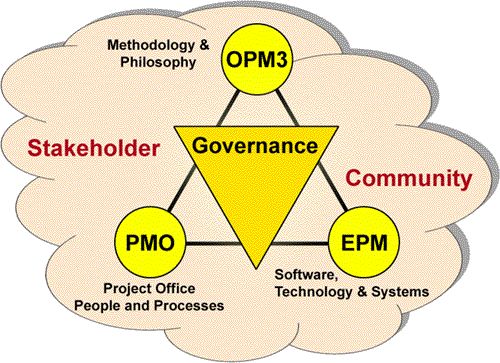 Project governance is a
sub-set of the overall governance processes of the
organization, focused on defining as accurately as
possible 'what' each project or program has to deliver,
and then ensuring resources and systems are in place to
achieve a successful outcome! It goes without saying the
'what' should be aligned with and contribute to the
strategic objectives of the organization. Projects are
typically the catalysts that generate the new income
streams, greater efficiencies, and business changes, that
underpin changes in overall corporate performance. These
changes are the basis for forecast future incomes,
expenditures, and profitability, that need to be disclosed
to the market and promptly updated as changes occur on an
ongoing basis.
Project governance is a
sub-set of the overall governance processes of the
organization, focused on defining as accurately as
possible 'what' each project or program has to deliver,
and then ensuring resources and systems are in place to
achieve a successful outcome! It goes without saying the
'what' should be aligned with and contribute to the
strategic objectives of the organization. Projects are
typically the catalysts that generate the new income
streams, greater efficiencies, and business changes, that
underpin changes in overall corporate performance. These
changes are the basis for forecast future incomes,
expenditures, and profitability, that need to be disclosed
to the market and promptly updated as changes occur on an
ongoing basis.
The legal liability of corporate managers and Directors the world over is being tightened. At the same time shareholders and other corporate stakeholders are becoming less tolerant of errors of judgement and loss of control. The challenge now facing every organization that relies on projects to instigate change and grow value is to move from an ad hoc system of ‘doing a project’ to one that is integrated, robust, repeatable and auditable. This transition requires the active involvement and understanding of senior management, supported by properly trained and qualified project personnel who have the authority and capability to implement best practice processes and systems.
As a minimum, the two key questions that need to be answered before initiating a project are 'can we do it?' and 'should we do it?'. If there is any doubt about the first question a feasibility study is required, WP1027 outlines the processes involved in undertaking a Feasibility Study. The question 'should we do it' is answered by the Business Case. The role of management is to answer these questions, the role of governance is to ensure the systems are in place that require the questions to be asked, and ensures the answers are sensible.
Click through for more on:
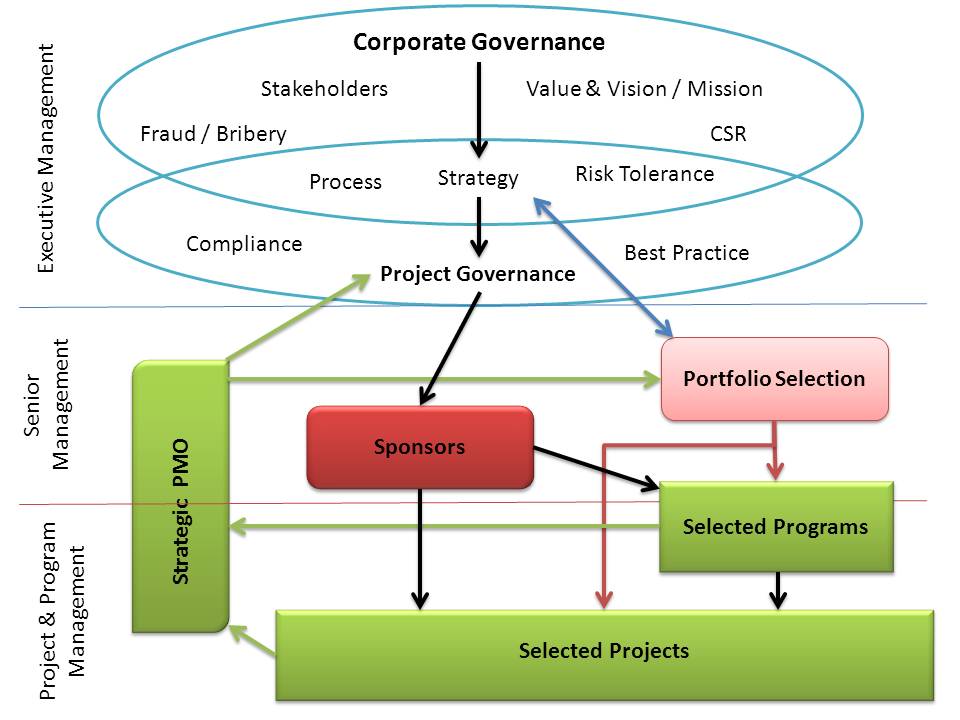
Project governance is a key subset of organizational governance and project controls provide the means by which project performance is monitored and controlled. These concepts are relatively easy to implement when the project’s scope, cost and time objectives are baselined and variations are managed through a structured change control process – the realm of traditional project management, but is more challenging if projects are being implemented using an agile approach.
WP: PPP Governance (Project Program Portfolio). The body governing an organization that undertakes projects as a part of its business, requires the governance process to be capable of governing PPP. This aspect of governance is:
Prs : Stepping up to governance. A preview of ISO 21505:2017 Project, programme and portfolio management — Guidance on governance, and its role in defining the governance of project management.
PP: The Management of Project Management : A conceptual framework for project governance. For an organization to create optimal value from its investment in projects there must be a clear link between the outputs created by the projects and the requirements of the organization's business strategy. This means that organizations that have a structure in place for aligning the project deliverables with their organizational goals will be better placed to realize their investment in projects, and achieve the value defined by their business strategies. This paper examines existing research, ideas and concepts of project governance and enterprise project management, and offers a framework to build on current theory development and practice. Synthesizing existing literature of project/program management, governance and portfolio management, this paper proposes four key elements to improve the performance of projects and hence create value for organizations. These four elements are:
The purpose of the framework described in this paper is
to provide guidance to organizations in the development of
effective project governance to optimize the management of
projects.
- Download the academic paper published in
the IJPM
- Download the presentation
Prs: Predicting
Completion, a Governance Requirement.
Governance has three basic functions:
1. Designing the organization’s culture, ethics, and
objectives to provide the best outcome for its
stakeholders.
2. Building a management team that is capable of achieving
the objectives.
3. Requiring assurance and feedback from management that
they are delivering the intended outcomes.
Within this framework, organizations need to know when
their projects are expected to finish! Not knowing is not
an option!
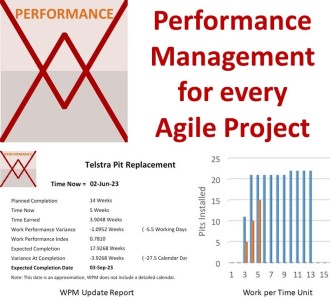
This presentation looks at the challenges of assessing status and predicting completion when CPM is ineffective. One solution is applying WPM, click through to see more on WPM.
Prs: Baked In Optimism – Why so many projects fail. This presentation looks at two processes that are ‘baked into’ standard project management estimating and control to show how recommended good practices are still optimistically biased. When preparing an estimate good practice recommends using Monte Carlo to determine an appropriate contingency and the level of risk to accept, but the typical range distributions used are biased – they ignore the ‘long tail’. When reporting progress, the estimating bias should be identified and rectified to offer a realistic projection of a project outcome. Standard cost and schedule processes typically fail to adequately deal with this challenge meaning the final time and cost overruns are not predicted until late in the project. This presentation highlights some of the causes for these problems - View the webinar on our Risk Assessment Page.
Art: ‘Not knowing’ is no longer an option. Effective governance and management requires timely access to ACCURATE information. Ensuring the information used to manage the organization is ACCURATE is an core governance responsibility.
Blg: Organizational Governance and Project Controls This post looks at the two way responsibility for providing ACCURATE controls information to the organizations directors. Before making use of project controls information the directors are legally required to have reasonable grounds to believe the officers and employees providing the information are reliable and competent people, and the director has made an independent assessment of the accuracy of the information. Conversely, the officers and employees who ‘make available or give information, or authorizes or permits the making available or giving of information’ to a director that relates to company affairs can be prosecuted if they have not taken reasonable steps to ensure that the information is complete, accurate, and is not misleading.
Prs: Governing and Leading Projects using Earned Value Management (EVM). Good management and good governance requires good information. When implemented effectively EVM is a robust, practical system focused on assessing and supporting the managers of a project. Based on the framework in ISO 21508, this presentation provides an overview of the 11 steps needed to implement EVM effectively.
Prs: Governing Agile
– the changing role of project controls in an ‘agile’
environment. The challenges of governing and
managing an 'agile' environment are significant. If, you
cannot manage things you cannot control, and you cannot
control things you cannot measure but how can these tried
and tested mantras be applied to an inherently
unpredictable process such as agile? It is no longer
acceptable for ‘agile anarchists’ to advocate ‘trust us,
we are all above average and because we are all above
average you will get great outcomes’ (their limited
mathematics is frightening enough). Similarly the
‘water-scrum-fall’ approach of trying to fit agile/scrum
development inside a predetermined plan leading to the
inevitable fall failure has been discredited by major
disasters in the UK. A better approach is needed to
eliminate the biggest risk to agile as a project delivery
strategy, the increasing number of high profile failures.
This requires the development of effective governance and
controls systems that actively support successful agile
implementations – the focus of this presentation.
This paper will describe situations where Agile offers a clear advantage and then describe how the overall governance structure and project controls systems need to adapt to provide valuable support to the Agile processes whilst still generating accurate information for use at the higher levels of management and in the organization's governance systems. This presentation suggests an appropriate framework for the overall governance of agile projects (including the role of a steering committee) and outline the controls framework needed to support both the management and the governance of the project.
Art: Lessons for PMO managers from the CBA scandal. The CBA financial scandal of 2018/19 was a classic example of the effect of setting the wrong performance targets. If your measurement systems focus on the wrong things, you will get exactly what you asked for!
 Governance
is more than compliance. The purpose of covering any
organization is provide effective stewardship of the
resources being governed to provide sustainable benefits
for the relevant stakeholders.This requires the successful
delivery of projects and programs on a routine basis.
Governance
is more than compliance. The purpose of covering any
organization is provide effective stewardship of the
resources being governed to provide sustainable benefits
for the relevant stakeholders.This requires the successful
delivery of projects and programs on a routine basis.
Art: Governing for Success - Helping deliver successful projects. Suggestions on the journey organizations need to undertake to evolve and mature their management processes to achieve consistent success in the delivery of their projects and programs.
Art: Improving the Governance of Projects, Programs and Portfolios. Capabilities any governing body can implement to enhance it ability to govern PPP effectively.
Prs : Governing to
Create Value: An organizational perspective on
effective project management. This
presentation:
- Defines governance and the stakeholders the
governing body serves with a view to identifying the
broader measure of value essential for
effective governance.
- Differentiates management from governance;
governance is a management oversight process that
provides direction and oversight to the
management processes that deliver the value. The role of
governance is to ensure both governance
and management systems are working effectively to
generate value.
- Define the key functions of governance, and the
governing body, in creating the ethical and cultural
framework needed to generate sustainable
value for the organization.
- Define the role of the governing body in requiring
the organization's management to develop the
capability to undertake projects and
programs efficiently, in support of the organization's
strategic
objectives.
- Define the role of project, program and portfolio
management in creating the changes necessary
to generate future value for the
organizations stakeholders; plus the key roles of
executive and
operational management on the 'value
chain'.
- Finally, look at the role of project controls
professionals at each stage in the value generation chain
from innovation and strategy through to
benefits realization and value creation identifying the
governance processes and the management
actions they support, initiate and oversee.
Art: Do 80% of organizations average a project failure rate of 80%? This article highlights an intriguing anomaly in the data that could benefit from some structured research. If, as one view of the data suggests, some 80% of organizations have project failure rates in the region of 80%. But, based on the same data, that some 75% of executives in the organizations that routinely fail to deliver projects successfully appear to believe the opposite? If the surveys are reasonably aligned and accurate, this anomaly would explain why so many organizations refuse to invest in effective project delivery capability, and highlight a significant project governance challenge to be overcome.
We know organizations that manage projects successfully
achieve a significant cost-benefit over those that do not
- poor project delivery is directly linked to higher
project costs. Therefore, the long sought after answer to
Cobb’s Paradox* can at last be unveiled: If 75% of the
managers in poorly performing organizations believe their
projects are being delivered successfully, they have no
reason to invest in improving project delivery capability.
Outsiders may see project failure and know how to improve
the organization’s systems to prevent future failures, but
the majority of the managers in the organization cannot
see, or will not see, there is a problem that needs
fixing. Therefor, the answer to Cobb’s paradox: ‘We
know why projects fail, we know how to prevent their
failure -- so why do they still fail?’ is the
responsible managers do not perceive their projects as
failing and therefore will not invest in solving a problem
they cannot, or will not, acknowledge.
Download the original version of this article published in
the PM World Journal.
* See more on Cobb's Paradox in the 'Governance Failure'
section below.
Blg: Measuring Project Success This post looks at the wider question of measuring project success in the context of the new Elizabeth Line in London as it approaches completion some 4 ½ years after the original planned opening date in December 2018 and £4+ Billion over budget. But with more than 100 million journeys made in the first year, currently around 600,000 journeys every day, the line has been declared a success. The patronage is above forecast levels and the project is on track to break even by the end of the 2023/24 financial year.
Prs : Governing for success, Crossrail - PPT - Construction CPM 2019. This presentation applies the principles outlined above to the London Crossrail debacle as at 2019. The eventual full opening of Crossrail (renamed to the Elizabeth Line) was delayed to 2022.
Prs: Portfolio governance and risk – it’s all about the stakeholder. The art of portfolio management is to balance the risks and rewards of investing in projects, whilst keeping the overall risk exposure at a level that is acceptable to organization's the key stakeholders.
DP: Conditions for project success. Research by the APM confirms that the environment in which the projects operate are at the heart of improving project outcomes.
The consequences of poor governance is poor management leading to loss of value.
Blg: One Defence Data – Another ‘Big Consultant’ issue? This blog highlights a report by the ABC on another major governance failure, this time on the Australian $100 million One Defence Data systems integrator contract, awarded to KPMG Australia Technologies Solutions. The report suggests the project has been plagued by poor governance, leading to a lack of accountability and conflicts of interest.
Blg: KPMG hit with record fine for their role in the Carillion Collapse. In 2018 the Carillion group of companies were bankrupt owing £1.5 Billion ($2.9 billion Australian), at the time, the largest bankruptcy ever in the UK. In October 2023, KPMG was fined a record £21 million (AU$40 million) for a ‘textbook failure’ in its audits of Carillion in the years leading up to the implosion. This post looks at the failures of governance and a £1 Billion 'black hole' in the accounts directly related to project cost overruns.
Blg: Ethics and Governance in Action. The best governed organizations will have ethical failures, even criminal activities, occurring from time to time. The difference between a well governed organization with a strong ethical framework and the others is how they deal with the issues.
Art: Do 80% of organizations average a project failure rate of 80%? One view of the published data suggests that 80% of the organizations that routinely undertake projects have an 80% project failure rate, but 75% of the executive management in these organizations think this is acceptable.This article looks at the data and the issues. Download the original version of this article published in the PM World Journal.
Blg:
Poor Governance creates complexity.
Uncertainty is not the same as ambiguity – failing to
manage both of these factors increases complexity.
Blg: The Capital Crime. Consequences of executive management failing to effectively ‘manage the management’ of projects and programs.
Blg: Project or Management Failures? Defining how many project failures are caused by project management shortcomings and how many are set up to fail by the organizations management.
Art: Why are so many projects set up to fail? Allowing management to set unrealistic targets is at its root a governance failure.
Blg: Is your steering committee costing $5000 per hour? Effective steering committees work with the project manager and sponsor to help the project successfully navigate the organizational stakeholder environment and resist the urge to interfere in the actual running of the project or program!
Blg: Cobb’s Paradox Cobb’s Paradox states, ‘We know why projects fail; we know how to prevent their failure – so why do they still fail?’ PMI has recently published its latest Pulse of the Profession survey which shows some improvements on the 2008 and 2006 results but not much. Nearly half the projects surveyed in 2010 still failed to meet time and cost targets and nothing much has changed since.
Blg: Cobb’s Paradox is alive and well In 2011, another report into the management of IT projects asks the same question as Cobb! This time the report was prepared by the Victorian Government Ombudsman, in consultation with the Victorian Auditor-General, it documents another series of failures largely created by executive management decisions and is still relevant a decade or more later.
 Governance
and management are different concepts, the role of
governance is to set 'the rules' and objectives for an
organization or entity, the role of management is to work
within the 'rules' to achieve the objectives. The
functions of governance interact with the functions of
management; the key difference being governance sets the
rules and objectives, management works within the rules to
achieve the objectives.
Governance
and management are different concepts, the role of
governance is to set 'the rules' and objectives for an
organization or entity, the role of management is to work
within the 'rules' to achieve the objectives. The
functions of governance interact with the functions of
management; the key difference being governance sets the
rules and objectives, management works within the rules to
achieve the objectives.
In many jurisdictions governance is a legal
responsibility of the organization's Officers. Precisely
who is an 'officer' has been clarified by the Australian
High Court in Australian Securities and Investments
Commission v King [2020] HCA. The key finding in ASIC
v King is that the function of being an officer is
defined by reference to the facts of the relationship
between an individual and the corporation in relation to
managing or directing the affairs of the corporation.
People who are 'officers' of a corporation and legally
responsible for its governance include: the Secretary of
the Corporation and its Directors, people who make, or
participates in making, decisions that affect the whole,
or a substantial part, of the business of the corporation,
and people who have the capacity to affect significantly
the corporation's financial standing.
Blg: Does organizational governance exist? Yes! Governance sets the objectives and rules for the organization, management works within the rules to achieve the objectives.
Blg: Management -v- Governance. The governing body (typically Directors) directs and governs; managers manage at various levels.
Blg: Governance -v- Management: A Functional Perspective. The functional differences between the roles of governance and management. Art : Stakeholders expect good governance. Stakeholders are becoming less tolerant of governance failures leading to bad management, but confuse governance and management.
Blg: PMI’s Practice Guide for the Governance of Portfolios, Programs, and Projects. Misses the 'boat' by failing to differentiate the functions of management and governance - this post highlights the differences and the shortcomings in the Practice Guide.
ISO 21505:2017 Project, programme and portfolio management -- Guidance on governance Also available as AS ISO 21505 from Standards Australia. This standard describes the context of, and guidelines for, the governance of projects, programmes and portfolios.
ISO
37000:2021 Governance of organizations - Guidance.
This document gives guidance on the governance of
organizations. It provides principles and key aspects of
practices to guide governing bodies and governing groups
on how to meet their responsibilities so that the
organizations they govern can fulfil their purpose. It is
also intended for stakeholders involved in, or impacted
by, the organization and its governance.
APM GoPM Publication (UK) - Directing Change, a guide
to governance of project management
- Association for Project Management - https://www.apm.org.uk/
- Download the booklet: Directing Change - A guide to governance
of project management
OECD Principles of Corporate Governance: http://www.oecd.org/daf/ca/
Major projects association (UK) Governance
resources:
https://majorprojects.org/knowledge/search/?fwp_search_resources=governance
 For papers on governance presented at the
PGCS Annual Symposium see:
For papers on governance presented at the
PGCS Annual Symposium see:
https://www.pgcs.org.au/papers/governance/
PG3QA - Project, Programme & Portfolio Governance Qualification Authority: a UK based publishing and certifying body focusing on improving the understanding, implementation and management of governance arrangements in organizations from any size or industry: https://www.p3gqa.com/