Location:
PMKI > PM
Knowledge Areas > Integration Management.
- Integration Overview
- Develop project management plan
- Direct and manage project work
- Knowledge Management (manage
project knowledge)
- Monitor and control project work
- Perform integrated change control
- Close project or phase
- Useful External Web-links &
Resources.
Other related sections of the PMKI:
- Project initiation,
including the project charter and business case.
- Organizations & Governance
- Project controls and scheduling

Project Integration Management describes the processes used to identify, define, combine, unify, and coordinate all of the various processes and activities needed to successfully deliver the project's objectives. It involves a project manager making choices about:
This function is the specific responsibility of the
project manager. All of the other skills and disciplines
will typically have experts involved to undertake the
majority of the work. The project manager’s skill is
understanding enough about the different disciplines to be
able to take a holistic view of the work and manage the
integration and optimization of the total effort of the
project.
Click through for more on the
personal skills and competencies required by the project
manager.
Integration Management focuses on the coordination and integration of the various project management activities performed by different discipline experts including:
Organizations create the environment within which projects and programs operate. The organizational aspects of project, program, and portfolio management, including entities such as PMOs are the focus of the Organizations & Governance section of the PMKI.
WP: EEF and OPA – The Differences. Outlines the 'Enterprise Environment Factors' (EEF) and 'Organizational Process Assets' (OPS) that may assist or constrain the work.
WP: PDC Taxonomy. This paper describes the overall Project Delivery Capability (PDC) framework needed by an organization to successfully create value from its projects and programs.
WP: The Strategic Management of Projects. Describes the organizations ability to select, nurture and deliver projects and programs effectively.
Complex Decision Making: Many aspects of project
management involve making complex decisions - this CSIRO
paper provides valuable insights into how people make
complex decisions:
download
the paper

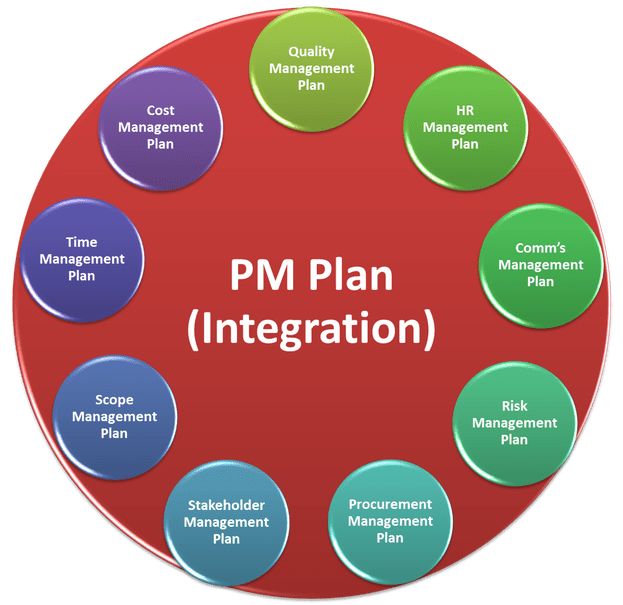 Developing
the project management plan integrates all of the other
project planning processes (time, cost, scope, quality,
etc.) to optimize project performance and to achieve
project’s objectives. Very often trade-offs are needed in
the planning processes between different discipline
focuses (eg, cost and time) to achieve the optimum
outcome.
Developing
the project management plan integrates all of the other
project planning processes (time, cost, scope, quality,
etc.) to optimize project performance and to achieve
project’s objectives. Very often trade-offs are needed in
the planning processes between different discipline
focuses (eg, cost and time) to achieve the optimum
outcome.
WP: Project Strategy.
Defining the best strategy for the achievement of the
projects objectives is key to achieving a successful
outcome. One the key early decisions that determine
project success is selecting the right approach to project
delivery. One-size does not 'fit all':
- Agile approaches work in some situations but need
a very different management style.
See
more on Agile.
- Traditional approaches need to be varied depending
on the project's type, size and procurement
strategies. See
more on project typology.
Art: Philosophies & Principles Used to shape planning approaches. Any output from a planning process is an expression of the fundamental principles and philosophies (ie, approaches) applied by the planners to develop their plan. This article outlines some of the approaches that can be used in combination, or isolation to develop a project plan.
Blg: Defining Project Success using Project Success Criteria. Project success can be ephemeral – successful organizations work to define success so they know when it has been achieved!
Art: Achieving Real Project Success. There are at least three different criteria for success that can operate independently: Project Management Success, Technical Success & Business Success.
WP: Statement of Work (SoW). A Statement of Work (SOW) is a formal document that captures and defines the work activities, deliverables and timeline the project (or a vendor) will execute against in performance of specified work for a client. The SOW typically forms part of a purchase order or contract but may be attached to a business case.
A complete section of the PMKI is devoted to project controls and scheduling.
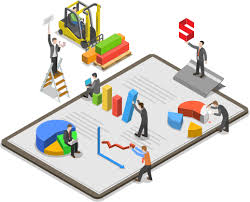 Directing
and managing the project’s work is the whole purpose of
project management; the project team, suppliers, and
subcontractors need to implement the project plan and
create the project’s deliverables. The project manager
needs the knowledge and expertise to lead this effort.
Directing
and managing the project’s work is the whole purpose of
project management; the project team, suppliers, and
subcontractors need to implement the project plan and
create the project’s deliverables. The project manager
needs the knowledge and expertise to lead this effort.
Art: Understanding ‘Expert Judgement’. Expert judgement is vital; this paper explains what it is and how to apply it.
WP: Managing Meetings. Meetings are a key part of all projects and central to the effective communication needed to direct and manager work. But, it is important to make the necessary meetings effective.
WP: Issues Management. An issue is a current problem that has a quantifiable negative impact on the work of the project, and requires managing.
Defining, selecting and implementing an effective methodology and then using process improvement to enhance the methodology is important in achieving consistent outcomes:
WP: Methodologies. A step-by-step series of processes for delivering a project, based on established ways of achieving a successful outcome.
Blg: PMBOK -v- Methodology. The PMBOK® Guide is a guide to knowledge, not a methodology. Selective application of the knowledge is needed to create a methodology.
Blg: Agile is NOT a Project Management Methodology. Agile is a product development methodology that can be usefully applied in a range of soft projects including IT.
Effective processes and procedures start from well founded principles, only after these are established should you add processes and practices to support the principle. And the inverse is equally important - don't accept or apply any process or practice without first determining what principle that process or practice is based on or informed by.
WP: The value of Standard Operating Procedures. Well designed SOPs and workflows allow 'bounded initiative' to be used as an 'agile' management approach.
Art: Processes in Project Management. The next generation of project management standards to be released by both ISO and PMI in 2020 will look radically different to their predecessors. This article explains why 'processes' are being dropped from the new standards (and their use in supporting the implementation of the standards).
WP: Process Improvement. A process is a series of standard actions, tools or techniques that are applied to transform the inputs to the process into outputs.
Art: Processes -v- People. You can get the best of both worlds by embedding organizational agility into your procedures, methodologies and management.
Blg: Self Correcting Processes. Designing efficient processes so that their use is almost unavoidable.
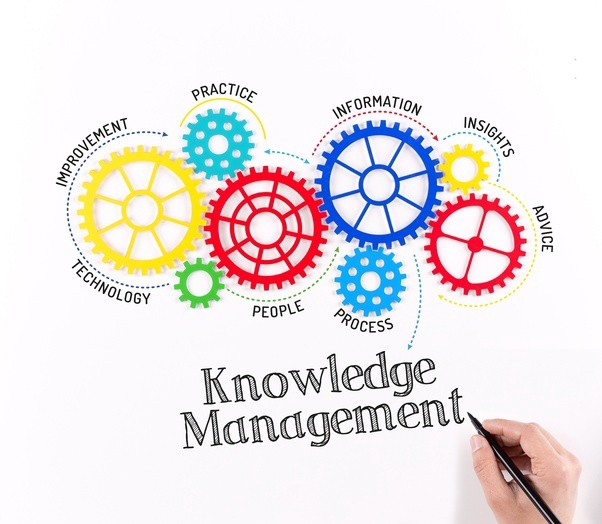
Lessons learned are part of the organization's knowledge management (KM) system and are both an input and an output from a project.
Knowledge and information are an important input to doing the work, and then monitoring and controlling the work creates new knowledge. This knowledge may relate to:
This knowledge needs to be captured, and made available for use both later in the project and within the organization as a whole. The KM function incorporates the traditional ‘lessons learned’ processes, but extends to a much wider range of documentation and information.
Initially, the useful learning is captured in the project’s ‘lessons learned register’ and then transferred across to the organization's KM system at appropriate times. Typically this would be at the end of a phase, sprint or iteration. As a consequence of this and other inputs, the organization's KM system gets to hold a lot of useful information.
When a project needs to do something challenging, accessing the right information from the organization helps minimize errors and saves time. This information is an ‘Organizational Process Asset’, which largely consists of ‘lessons learned’ from other (previous) projects. Developing a good KM system that actually provides useful information quickly and accurately though, remains a major challenge for most organizations. Achieving this is the focus of the papers in this section.
Data collection is the process of gathering facts that may provide information and inform either a controls system or a decision. For example daily sales data in a shop can be used to automatically update the restocking system. But the same data can be used to inform decisions on pricing and what to promote more or stop selling.
There are two ways to collect data. One is to decide in advance what you need and set up processes to gather that data set only - the risk is there may be important information not be collected. The other is ‘big data’ where you gather information on everything and put it into a system for data mining - the challenge here is asking the data mining tools the right ‘questions’. Good systems collect the data real-time using feeds from tools or systems that are needed to operate the business (eg, sales data direct from the cash registers in real time). Less effective systems collect data after the event (eg, a weekly review of progress). But on its own data is useless it needs transforming into information which is the role of 'knowledge management'.
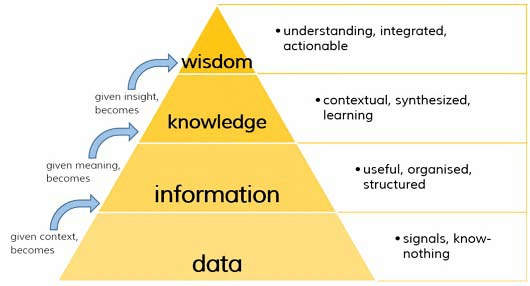 Knowledge
management is becoming increasingly important in many
organizations, and is now a central aspect of integrated
project management. The term ‘knowledge management’
involves two interlinked elements that together can help
organizations grow and succeed, information management and
knowledge creation. People know things, knowledge is
organic, adaptive and created – it exists in the minds of
people. Information is recorded, it is held in systems and
made accessible to people. Good information management
systems contain verified information in a useful format
but the information is of no value unless it is accessed
and used. This section highlights the important fact that,
knowledge management systems require the active
involvement of people at every stage of the DIKW* chain to
contribute anything of value back to the organization that
has invested in setting up the system.
Knowledge
management is becoming increasingly important in many
organizations, and is now a central aspect of integrated
project management. The term ‘knowledge management’
involves two interlinked elements that together can help
organizations grow and succeed, information management and
knowledge creation. People know things, knowledge is
organic, adaptive and created – it exists in the minds of
people. Information is recorded, it is held in systems and
made accessible to people. Good information management
systems contain verified information in a useful format
but the information is of no value unless it is accessed
and used. This section highlights the important fact that,
knowledge management systems require the active
involvement of people at every stage of the DIKW* chain to
contribute anything of value back to the organization that
has invested in setting up the system.
* DIKW = Data, Information, Knowledge, Wisdom.
Art: Data to Wisdom - Creating and Managing Knowledge. The processes and documents used to transform raw data into the knowledge needed for wise decisions from a project controls perspective.
PP: The Knowledge Management / Relationship Cycle. The reciprocity between the data, information and knowledge that is exchanged with stakeholders for the benefit of the stakeholder, and the business benefit of the organization.
Art: Knowledge management is more than information management. People know things, knowledge is organic, adaptive and created – it exists in the minds of people. Information is recorded, it is held in systems and made accessible to people.Both aspects need to be incorporated into a KM system.
Art:
Finding Information – The art of Indexing.
There are vast amounts of knowledge available, the
challenge is finding the right information when needed, a
problem that has existed for at least 800 years! This
article looks a the origins and types of index and
taxonomy, and provides links to a number of specialized
search engines that are free to use.
The PMKI
Taxonomy is designed to make finding the
information contained in this site easier, and augments
the site specific Google search in the header above.
Blg: The Great Library of Alexandria – The first Google? The influence of the Great Library of Alexandria on the development of knowledge management was significant. The systems developed in the library to structure knowledge, lay out the library, and classify the documents carry through to modern times.
Art: Knowledge management is more than simply learning lessons.The challenges of transforming lessons learned into useful knowledge.
WP: Lessons Learned. The process of gathering and using lessons in a corporate knowledge management context.
Art: Ask for information you can use. If you are not careful, the easy to measure drives out the harder to quantify, even when the latter is more important.
Knowledge management is integral to:
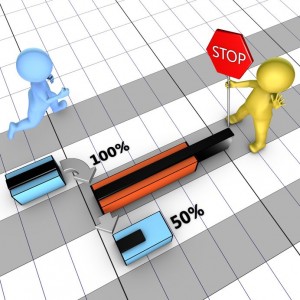 Management
always involves the monitoring and controlling of
activities to ensure they remain as closely aligned to the
plans as is practical. The monitoring and controlling
process integrates outputs from all of the other
controlling processes to provide a holistic picture of the
current status of the project and the information needed
to manage its ongoing activities. This requires the
integration of the various project controls functions to
develop information to assist in the management of the
project and communication with stakeholders.
Management
always involves the monitoring and controlling of
activities to ensure they remain as closely aligned to the
plans as is practical. The monitoring and controlling
process integrates outputs from all of the other
controlling processes to provide a holistic picture of the
current status of the project and the information needed
to manage its ongoing activities. This requires the
integration of the various project controls functions to
develop information to assist in the management of the
project and communication with stakeholders.
WP: Project Controls – A Definition. Project controls are the data gathering, management and analytical processes used to predict, understand and constructively influence the time and cost outcomes of a project or program through the communication of information in formats that assist effective governance and management decision making.
WP: Gateways and Score Cards. Two approaches to determining the on-going viability of a project and measuring its success are ‘gateway reviews’ and balanced scorecards.
Click through to see more on integrated project controls.
 Despite
the best efforts of project managers, planners and those
managing the work, change is inevitable!
Projects must adapt to changing conditions and
circumstances whether it’s an unexpected event, a mistake
somewhere in the process, or a client instructed
variation. Effective change management is key to
project success and incorporates:
Despite
the best efforts of project managers, planners and those
managing the work, change is inevitable!
Projects must adapt to changing conditions and
circumstances whether it’s an unexpected event, a mistake
somewhere in the process, or a client instructed
variation. Effective change management is key to
project success and incorporates:
The project team have to be able to identify and quantify, and then manage the consequences of the change, using the change management processes, to deal with changes arising from ‘all over the place’.
This activity directly affects the client and other stakeholders, therefore integrated change control almost inevitably involves some form of coordinated decision-making that includes senior management from within the performing organization and the customer. Once approved changes to the project are incorporated into the planning process, and from there into the actual work of the project. Consequently, the way a change request is processed can have a significant impact on the project and its eventual success - accuracy, agreement (or at least understanding), and speed are the three key elements to a good change control function.
DP: Project and Change Management in the PMBOK® Guide (PMI Publication). The way various PMI Standards support effective organizational change management.
Art: Creating Value from Change. The different roles involved in generating value from the change created by a project.
WP: Organizational Change Management. The overall importance of managing change effectively.
See more on organizational change management.
 Finally,
by definition projects are temporary activities that have
to be closed at completion. The final step in the
integrated management of a project is the closing of each
project phase and finally the overall project. This
includes the work needed to maximize the value achieved by
the project through proper transfers to either the
organization, or its client, including maximizing the
retention of knowledge.
Finally,
by definition projects are temporary activities that have
to be closed at completion. The final step in the
integrated management of a project is the closing of each
project phase and finally the overall project. This
includes the work needed to maximize the value achieved by
the project through proper transfers to either the
organization, or its client, including maximizing the
retention of knowledge.
WP: Lessons Learned. The process of gathering and using lessons in a corporate knowledge management context.
If the project is not closed off, system resources are wasted in accounts, HR, etc., people have a place to hide costs (by miss-allocating them), and budget, and other resources assigned to the project are not freed up for use elsewhere. The open project also offers opportunities for people to keep doing unnecessary extra work wasting money and resource effort.
Proper closure is essential if the project is terminated
early.
The Major Projects Knowledge Hub - Lessons learned from major projects in the UK - https://www.majorprojectsknowledgehub.net/
ISO Standards (with Australian adoptions)
- ISO 21500:2021 – Project, programme and portfolio management - Context and concepts (AS ISO 21500:2022)
- ISO 21502:2022 – Project, programme and portfolio
management — Guidance on project management (AS ISO
21502:2022)
(Replaces AS ISO 21500:2016 - Guidance on
project management)