Location:
PMKI > PM
Knowledge Areas > Project Initiation.


- Initiation Overview
- Innovation
- Opportunity Identification
- Project or Program Initiation
- Useful External Web-links &
Resources.
Other related sections of the PMKI:
- Value and benefits
realization
- Portfolio Management
- Project Governance
 The
purpose of initiation is to define as accurately as
possible what objectives the project (or
program) is expected to deliver or achieve, and the
parameters it is expected to work within. The expected
outputs (deliverables) should be aligned with, and
contribute to, the strategic objectives of the
organization, for more on this see Aligning
Projects, Programs and Strategy.
The
purpose of initiation is to define as accurately as
possible what objectives the project (or
program) is expected to deliver or achieve, and the
parameters it is expected to work within. The expected
outputs (deliverables) should be aligned with, and
contribute to, the strategic objectives of the
organization, for more on this see Aligning
Projects, Programs and Strategy.
The two key questions that need to be answered before initiating a project are can we do it?, and should we do it?. If there is any doubt about the first question a feasibility study is required, the question should we do it is answered by the Business Case. The naming convention for the steps leading up to the formal initiation of a project or program depends on your industry and the culture of the organization but there are four distinct stages:
Done properly, the initiation process sets projects up to succeed. But this is not always easy to achieve:
Initiation, and in particular the development of the project charter is the first step on the road to success and the completion of initiation (usually the approval of the project) starts the project integration management processes (discussed in the next section).
The key elements of initiation are discussed in more detail below.


In the context of organizations and projects, innovation is viewed as the development and application of better solutions that meet new requirements or open up new opportunities. It involves creating or imagining, a new idea, thought, or insight that imagines a new form of device, concept, or method of working. People are innovative, innovative organizations are those that empower their people to be innovative and then have the processes and systems in place to exploit the best of the innovative ideas that emerge.
Art: Innovation and Design Thinking. This article looks at what’s needed to create innovative ideas, and then how to use ‘Design Thinking’ to transform the best of the ‘bright ideas’ into something useful, even valuable,
Blg: Linking Innovation to Value. This post takes a closer look at innovation, which is the critical ‘front end’ of the value chain. It does not matter how well you do the wrong projects and identifying the 'right ones' needs creativity, innovation and discipline!
Art: Harnessing Bathroom Brilliance. Creativity is an essential element in problem solving and process improvement. But, the challenge facing most professionals is finding the time to be creative. This article looks at some ways to harness your innate creativity.
Blg: The Diolkos: Innovation, Evolution, or a Parallel Development?. This post looks at a likely precursor to the Diolkos, the Mirgissa slipway constructed in Egypt during the Middle Kingdom period some 1000 years earlier and asks the question was the Diolkos an original invention, or a synthesis of existing concepts combined in an innovative way? Both were designed to move cargo boats across several kilometers of land.
Click through to see more on benefits realization and value.
Click through to see more on creativity.
 Project/Program identification includes: Initial
requirements gathering (see Scope
Management for this topic), Strategic alignment,
Front end loading, Viability, and Feasibility. Often, a
‘project proposal’ is the first stage of defining the
project, generally with less financial data than a full
business case. Acceptance of the proposal, leads to
various 'studies' and the developing of a full business
case (which can be quite expensive). The business case is
then reviewed, and if accepted becomes the foundation for
the project charter and a working project.
Project/Program identification includes: Initial
requirements gathering (see Scope
Management for this topic), Strategic alignment,
Front end loading, Viability, and Feasibility. Often, a
‘project proposal’ is the first stage of defining the
project, generally with less financial data than a full
business case. Acceptance of the proposal, leads to
various 'studies' and the developing of a full business
case (which can be quite expensive). The business case is
then reviewed, and if accepted becomes the foundation for
the project charter and a working project.
Strategic alignment: All projects should support the organization's strategic goals. It is important to consider the strategic plan when making decisions about which projects should be approved and funded. There should be a prioritization process based on strategic goals that will guide the organization and its managers to make decisions about which projects and programs will be approved and therefore funded and resourced, and which will be rejected. While the decision to proceed, and the consideration of strategic alignment, occur prior to the selection of a project and appointment of the project manager, the project manager needs to be aware of these factors and consider them in all subsequent project decisions (for more on this see Aligning Projects, Programs and Strategy).
WP: Feasibility Studies. A Feasibility Study asks the question ‘can we do this?’ it should be a precursor to finalizing the business case which addresses the question should we do this?.
WP: Project Definition. Defining the project's objectives to ensure it creates the 'right' deliverables based on the client's requirements.
Blg: When does a project start and end? Looks at the issues around defining the point in time a project starts and more importantly, the point in time a project manager's responsibilities end.
WP: Project Size and Categorization. Each project is uniquely different a classification system helps group projects by type, size and difficulty.
Art: Project Selection. The factors involved in supporting effective project selection processes.
Programs, including defining size and classification are covered in the Program Management section of this website.
Requirements gathering is covered in the Scope Management section of this website.

Project initiation consists of the processes within the performing organization that facilitate the formal authorization to start a new project or move to a new project phase. It is primarily an organizational activity to:
These processes should be focused on improving a project’s chance of success, but most of the work is done before the project manager is appointed. The PMs responsibility is to make sure the initiation has been done correctly and the project objectives are achievable.
Deciding which projects to fund, which to defer, and which to cancel or ignore, is the core function of Portfolio Management. These decisions are based on the Business Case for new initiatives and on the current project reports for active projects (see more on Portfolio Management).
Documentation to initiate a project or program includes: the Business Case and the Project/Program Charter.
WP: Developing a Business Case. The Business Case is one of the most critical steps in the Project Life Cycle; it defines the overall value proposition for undertaking the project. The business case should define the value the project will create if successful, to justify its cost.
WP: Defining the Project Charter. The charter defines the project vision and objectives and summarizes the overall project strategy, scope, organization and implementation.This includes defining the project boundaries and authority levels delegated to the project managers.
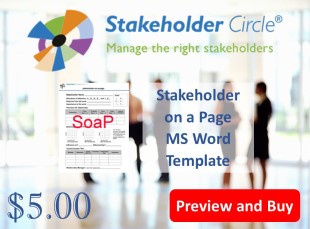
 Project Charter Template
can be viewed (free demo) and purchased from our web shop
for $5.00, it is an easy to use Word template designed to
make writing your project charter easy:
Project Charter Template
can be viewed (free demo) and purchased from our web shop
for $5.00, it is an easy to use Word template designed to
make writing your project charter easy:
- Add or remove sections.
- Guidance on what to include in each section.
- Replace our logo with your business logo.
This is a very robust, easy to use tool that ensures that
your project charters are complete and accurate.
PP: The Project Start-Up Conundrum. The conundrum is: That at the time when the project team can exert the greatest influence on a projects overall success (for the lowest cost), the team itself is at its least effective!!! The first 10% to 20% of a projects life is the period when it is easiest to influence its overall outcome in a positive way and derive the maximum cost benefits. But, projects are delivered by teams and each new project team requires significant time (and effort) to assemble, coalesce and grow into a powerful unit. Strategies to mitigate the conundrum are defined.
Value and Benefits
The relationship between outputs, outcomes, benefits and value and the role of the project or program in facilitating this are covered in the Value and Benefits Realization section of this website.
 Global
Innovation Institute (GInI) - the world’s leading
association in the field of innovation: https://www.gini.org/
Global
Innovation Institute (GInI) - the world’s leading
association in the field of innovation: https://www.gini.org/
 For papers on Innovation presented at the
PGCS Annual Symposium see:
For papers on Innovation presented at the
PGCS Annual Symposium see: