News Page Company Profile Consulting & ADR Resources & Papers Tools & Techniques Stakeholder Management Training Home

Books and Standards for Sale

Chinese proverb: Laws control the lesser man. Right conduct controls the greater one.

Select from:
 
-  Books for sale
 
-  PMI Standards for sale


Books Available for sale - Also see our list of interesting and recommended books

Top


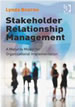
SRMM Book Cover
ISBN 978-0-566-08864-3
Hardback


Prices:
- International £60.00
- Australian    $99.00


Stakeholder Relationship Management: A Maturity Model for Organisational Implementation,
Gower Publishing Ltd, Aldershot, UK.  
Author:
Dr. Lynda Bourne 
Buy Now
Most organisations have difficulty implementing culture change, and will need assistance and guidance to implement a consistent process for identification and management of stakeholders and their (changing) expectations. As a continuous improvement process, stakeholder management requires understanding and support from everyone
in the organisation from the CEO to the short-term contractor. This requires the concepts and practices of effective stakeholder management to become embedded in the culture of the organisation.

This book provides the “road map” to help organizations achieve these objectives in two ways:
  • Firstly, it is a ‘how-to’ book that clearly describes the fundamental processes and practices based on the Stakeholder Circle® methodology and tools needed to support either individuals or organisations improve stakeholder management in endeavours such as projects and program management offices (PMO), but also in supporting organisational survival during mergers and acquisitions, and assisting the organisation whilst preparing bids and/or marketing campaigns.
  • For organisations that have recognised the importance of stakeholder engagement to their success, it is a guidebook for assessing their current maturity regarding implementation of stakeholder relationship management and defines a series of guidelines and milestones for achieving their preferred level of maturity using the Stakeholder Relationship Maturity Model (SRMM®).
     
  • Contents: 
    • Foreword; Preface. 
    • Section 1 - Framework: Introduction; Why stakeholders matter; Who can be stakeholders? 
    • Section 2 - The Right Stakeholders: Mapping stakeholders; Measuring stakeholder attitude; Monitoring the engagement. 
    • Section 3 - Implementing Stakeholder Relationship Practices: Effective implementation; Defining organisational readiness; Implementation guidelines; 
    • Conclusion; References; Index.
       
  • Previews:
  • Order your copy, personally signed by Dr. Lynda Bourne now:
 
Purchasing Options
Australian Sales - AU$ International Sales
On-Line from
Mosaic's Web Shop
 Close window to exit
Buy Now
Off-line
quotations
& orders

 
Order off line
On-Line from
Stakeholder Management
US$, €,
£
Buy Now
On-Line from
Gower Publishing 
US$, UK£
Buy Now
Off-line
quotations
& orders


Order off line
For more on the Stakeholder Circle® and SRMM® see:
Also available from:
 -  Construction Books Direct, the official bookshop of the Chartered Institute of Building (CIOB – UK)
 -  The PMI Marketplace, the official bookshop of the Project Management Institute (PMI – USA)
 -  Amazon: go to SRM book page

 -  And other good book shops.  
New Book Chapter
Publication 2011
Advising Upwards: A Framework for Understanding and Engaging Senior Management Stakeholders, Gower Publishing Ltd, Aldershot, UK.
Editor:
Dr. Lynda Bourne 

Studies have consistently shown that the active support of stakeholders from the Senior Leadership Team, particularly the sponsor, is a critical factor in creating successful outcomes. Successful activity managers not only understand this but are also willing to do whatever is necessary to ensure that their senior stakeholders understand and fulfil this support role. This requires the activity manager to be skilful at building and maintaining robust relationships, focused on engaging the support of senior executives, understanding their expectations and managing them through targeted communication. Effective communication helps change perceptions and adjust expectations (to make them more realistic and achievable), as well as helping to acquire the support necessary for successful delivery of the outcomes of the activities.

The principal focus of the book will be on perspectives that will contribute towards an understanding of the critical survival skill of engaging senior managers, and of ‘helping them help you’. It will include:
  • Stakeholder management theory and its application to senior management stakeholders: what makes engaging them so difficult?
  • Managing (or advising) upwards: the culture of organisational leadership and the demands of decision making in today’s competitive environment; 
  • An exploration of ways to secure and maintain the engagement and support of senior stakeholders, through diverse approaches based on behavioural theories, influence networks, operating within the power relationships of the organisation; 
  • Developing or adapting your sponsor (or leadership team) engagement practices to ensure a greater chance of successful delivery of organisational activities.

The book has two main objectives:
  • A ‘how-to’ book for the fundamental processes and practices to support either individuals or organisations in building and maintain upwards relationships with important stakeholders. These relationships are essential in all aspects of work to deliver an organisation’s business strategy through projects and programs. Similar relationships must also be considered during activities that support organisational survival such as mergers and acquisitions, or boosting organisational advantage through more effective processes for tender bidding, marketing campaigns or even critical operational activities; 
  • Through contributions from researchers and practitioners in related fields the book will provide diverse perspectives on the changing world of management and stakeholder relationship management through considerations of culture, group and individual behaviour, organisational management theory and other related subjects.
Contributing authors (in alphabetical order) include: Alfonso Bucero, Randall Englund, Robert Higgins, David Hillson, S.K. Khor, Bob McGannon, Ruth Murray-Webster, Arthur Shelley, Doris Spielthenner and Jon Whitty.
 
  We will be progressively adding books to this list - check back soon.
 
See our list of interesting and recommended books


PMI Standards (from the PMI Melbourne Chapter)

Top

These standards are only available for delivery in Australia  -  Payment is made to the PMI Melbourne Chapter.

 Overseas: contact the PMI Bookstore at: www.pmibookstore.org

Notes: 
  • PMI Members may download protected PDF versions of all PMI Standards from the PMI website for their personal use or for review prior to purchasing [see instructions for downloading]
  • To order PMI Standards (books):
Selected PMI Standards held in stock.
PMBOK A Guide to the Project Management Body of Knowledge 4th Edition - the PMBOK® Guide
Price: $88.00 + Delivery charges $13.20 PMBOK Training options see: PMI Certifications 

The PMBOK® Guide4th Edition is one of the most essential tools in the profession and is the de facto global standard for project management. The Fourth Edition continues the tradition of excellence in project management with a standard that is even easier to understand and implement with improved consistency and greater clarity.
 
What’s new?
 
-  Standardised language has been used throughout the document to aid reader understanding.
-  New data flow diagrams clarify inputs and outputs for each process.
-  Greater attention has been placed on how Knowledge Areas integrate in the context of the
    Initiating, Planning, Executing, Monitoring & Controlling, and Closing process groups.
-  Two new processes are featured: Identify Stakeholders and Collect Requirements.

Program Management
The Standard for Program Management  -  2nd Edition
Price: $82.50 + Delivery charges $13.20 PgMP Training options see: Program Management Professional Exam Prep 

The Standard for Program Management defines a set of processes that represent generally recognised good practices in program management, as well as promote efficient and effective communication and coordination, among various project management groups including; program managers who would like to improve their skills, project managers who would like to understand more about the role of program managers, portfolio managers who want to learn about the interface between program and project managers and senior managers who would like to improve their understanding of program boards and steering committees.  

Portfolio Standard
The Standard for Portfolio Management  -  2nd Edition

Price: $82.50
+ Delivery charges $13.20

The discipline of portfolio management is a means of helping organisations focus on both “doing work right,” and on “doing the right work.” The Standard for Portfolio Management provides a framework for you to use to take a comprehensive view of portfolios, group them for the most effective management, and ensure that all components are aligned strategically.

In parallel to the growing acceptance and utilisation of project management, the discipline of portfolio management is gaining favour as a means of helping organisations remain effective and competitive. The Standard for Portfolio Management provides portfolio managers with a resource to help them develop professionally and achieve success for themselves and their Organisations. Within an organisation, a portfolio represents a collection of active programs, projects and other work undertaken at a specific point in time to help the organisation reach its strategic objectives. In essence, a portfolio reflects the priorities, investments and resource allocations of the organisation. Portfolio management, therefore, is the centralized management of one or more portfolios in order to achieve specific strategic business objectives. As a process, portfolio management enables organisations to identify, categorize, evaluate, select, prioritize, authorise, terminate and review various portfolio components to ensure their alignment with current and future business strategy and goals, which in turn helps the organisation optimise the use of its limited resources. Because portfolios address all aspects of an organisation, reaching into organisational functions such as finance, marketing, corporate communications and human resources, as well as strategic objectives, portfolio management has become a key method used to create and execute effective corporate governance frameworks. With this in mind, The Standard for Portfolio Management is designed to provide a guide to those processes generally recognised as good practices in portfolio management and focuses on portfolio management as it relates to the disciplines of program and project management.

OPM3

Organisational Project Management Maturity Model Knowledge Foundation  -  2nd Edition
Price: $132.00 + Delivery charges $13.20 OPM3 Assessment and Training options see: Mosaic's OPM3 Home Page 

OPM3 is a standard unlike other contemporary maturity models. The Knowledge Foundation is a supplemental book that contains the KNOWLEDGE piece, the first of the three interlocking elements of OPM3. The Knowledge Foundation describes organizational project management, organizational project management maturity, relevant Best Practices and how to use OPM3, with its various appendices and a Glossary offers a wealth of practical information. The concepts and methodology are straightforward and are clearly illustrated through informative figures and charts. This essential piece of OPM3 will lay the groundwork needed for users to move on to the ASSESSMENT and IMPROVEMENT elements, the remaining two interlocking elements of OPM3, available through the on-line 'Single' or 'Multi-User' versions of the tool.
[ See more on OPM3 ]
Competency Framework
Project Manager Competency Development Framework - Second Edition

Price: $66.00 +
Delivery charges $13.20

The PMCD framework outlines the key dimensions of project management competency and identifies those competencies that are most likely to impact project manager performance. Project manager competency consists of three separate dimensions: • Knowledge – what a project manager knows about the application of processes, tools and techniques in project activities • Performance – how a project manager applies project management knowledge to meet project requirements • Personal – how a project manager behaves when performing activities in a project environment In order to be recognized as fully competent, a project manager must satisfy each of these three dimensions.
[ See also PMI's Career Framework ]

Practice Standard for Scheduling The Practice Standard for Scheduling 

Price: $60.50
+ Delivery charges $13.20

Effective project scheduling is critical to the success of a project. The Practice Standard for Scheduling is a systematic guide describing hallmarks of an effective schedule methodology, as well as providing quantifiable means for assessing the maturity of a schedule model. Chapters: 1 - Intro (1 pg), 2 - Schedule development process (6 pgs), 3 - Good Practices (9 pgs), 4 - Scheduling Components (i.e. 33 page listing of items and characteristics: name, required/optional, calculated/manual, data format, behaviour description, good practices, associated component, definition), 5 - Conformance Index (2 pgs, and Conformance Scoring in App D), plus lengthy Glossary (20 pgs).
[ See more on Scheduling ]
  For implementation of the Practice Standard, see Mosaic's 'How To' develop an effective schedule workshop [view outline].  
Config Mgt The Practice Standard for Project Configuration Management 

Price: $49.50 + Delivery charges $13.20

Project configuration management is the collective body of processes, activities, tools, and methods focused on establishing and maintaining the consistency of a system's or product's performance and its functional and physical attributes with its requirements, design, and operational information throughout its life. Configuration management is implemented to actively guide the direction of the project and support communication that will facilitate successful completion to specification. Due to the increasing complexity of projects and greater competition among companies, the knowledge of configuration management techniques is more important than ever.

PMI_Risk_Std The Practice Standard for Project Risk Management 

Price: $60.50
+ Delivery charges $13.20

The Practice Standard for Project Risk Management covers risk management as it is applied to single projects only and is consistent with other PMI standards. Written for project practitioners,
this practice standard can be used to validate the risk management process being employed in a specific situation, project or organization. Topics include:
 •  Plan Risk Management
 •  Identify Risks
 •  Perform Qualitative Risk Analysis
 •  Perform Quantitative Risk Analysis
 •  Plan Risk Responses
 •  Monitor and Control Risks 
  Additional PMI Standards not held in stock by PMI Melbourne Chapter
   
All of the standards described above are held in stock by the PMI Melbourne Chapter (shipping is usually overnight), the following standards may be purchased from PMI USA directly (www.pmi.org/Marketplace), or can be imported on request:
   
-  PMBOK® Guide - 4th Edition translations (ten different languages).
-  Construction Extension to the PMBOK® Guide Third Edition
-  Government Extension to the PMBOK® Guide Third Edition
-  Practice Standard for Earned Value Management
-  Practice Standard for Work Breakdown Structures - 2nd Edition
   
Email: PMI.Standards@mosaicprojects.com.au with your requirements 

A single delivery charge of $13.20 applies for up to 2 standards, call 03 9696 8684 for a quotation on larger orders.


Home - Contact Us - Site Map - Company - Training - Consulting - Resources - Legals


Top

Tel: (03) 9696 8684
.Intl: +613 9696 8684

Copyright © 2010 Practical PM Pty. Ltd.
All rights reserved.
Important legal notices, disclaimer and trademark attributions.